
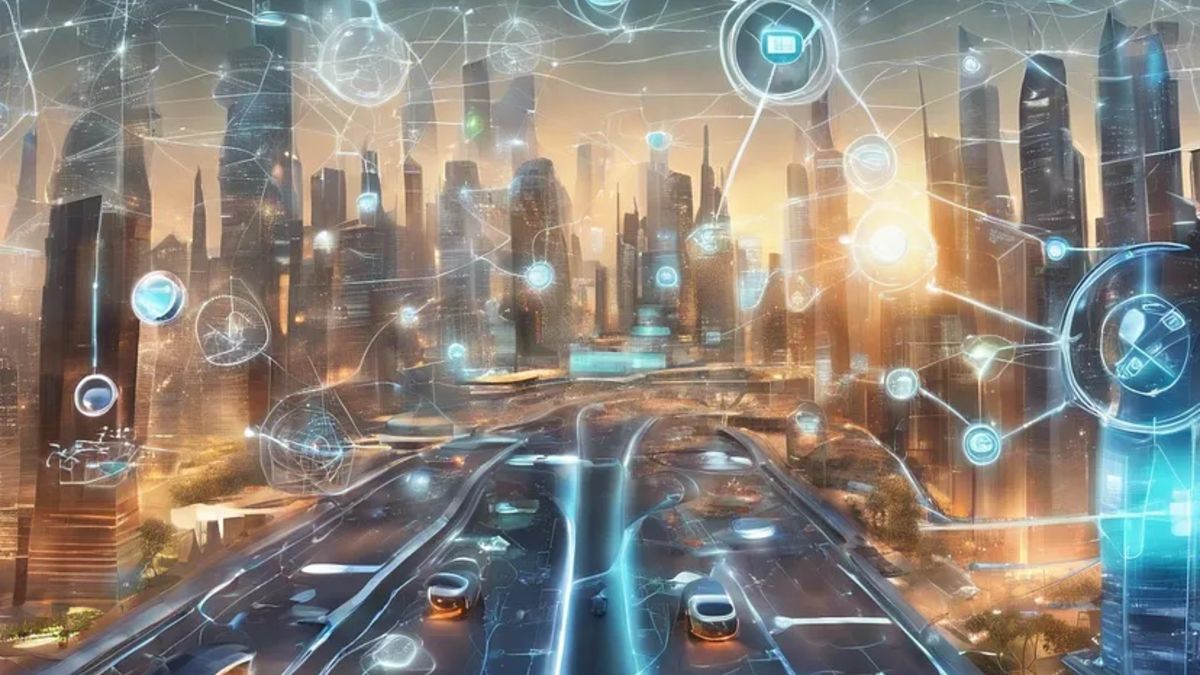
The Internet of Things, commonly known as IoT, is changing the way people interact with technology. From smart homes and wearable devices to connected cars, factories, hospitals, and cities, IoT allows physical objects to communicate, collect data, and respond to changing conditions.
Connected devices are becoming a normal part of everyday life. A smart thermostat can adjust room temperature automatically, a fitness tracker can monitor activity, and industrial sensors can detect equipment problems before a machine stops working.
As internet connectivity becomes more widespread, the number of connected devices continues to grow. Understanding how IoT works is important because this technology is influencing homes, businesses, transportation, healthcare, manufacturing, agriculture, and many other industries.
What Is the Internet of Things?
The Internet of Things refers to a network of physical devices that can collect, exchange, and sometimes process data through internet or network connections.
These devices usually contain sensors, software, processors, and communication technologies. This allows them to detect information about their surroundings and share that information with other devices or computer systems.
For example, a smart home security camera can detect movement, record video, and send a notification to a user’s smartphone.
The important idea behind IoT is connectivity. Ordinary physical objects become more useful when they can communicate and respond to information.
What Are Connected Devices?
Connected devices are physical products that can communicate with other systems through technologies such as Wi-Fi, Bluetooth, cellular networks, or other wireless connections.
Smartphones, smartwatches, smart televisions, security cameras, connected appliances, and industrial sensors are common examples.
Some connected devices communicate directly with the internet, while others connect through a smartphone, gateway, or local network.
The purpose of connectivity is usually to provide automation, remote control, monitoring, data collection, or improved functionality.
How Does the Internet of Things Work?
Most IoT systems involve several important components working together.
First, sensors or connected devices collect information. The information could include temperature, movement, location, speed, pressure, humidity, energy consumption, or many other measurements.
The device then sends the collected data through a network.
Software platforms or cloud systems may analyze the information and determine whether an action should be taken.
For example, a smart irrigation system could detect that soil moisture is too low and automatically activate a watering system.
This process can happen with little or no direct human involvement.
Sensors and Their Role in IoT
Sensors are one of the most important technologies behind the Internet of Things.
A sensor allows a device to detect something about the physical environment.
Temperature sensors measure heat, motion sensors detect movement, GPS sensors provide location information, and air-quality sensors can monitor environmental conditions.
Without sensors, many connected devices would not be able to understand what is happening around them.
As sensor technology becomes smaller, cheaper, and more accurate, IoT systems can be used in more products and environments.
Smart Homes and IoT
Smart homes are one of the most familiar applications of IoT technology.
A smart home may include connected lighting, security cameras, thermostats, speakers, door locks, appliances, and energy-monitoring systems.
Users can often control these devices using smartphones, voice assistants, or automated schedules.
For example, smart lights can turn off automatically when nobody is in a room. A smart thermostat can adjust temperature based on household routines.
These systems can improve convenience, comfort, security, and energy efficiency.
However, users should also consider privacy and security when connecting household devices to the internet.
Wearable Connected Devices
Wearable devices are another major category of IoT technology.
Smartwatches, fitness trackers, health monitors, and other wearable devices can collect information about activity, movement, sleep, and other measurements.
These devices often connect to smartphones or online services, allowing users to view and analyze their data.
Wearables are commonly used for fitness tracking, communication, navigation, and personal organization.
As sensors improve, wearable technology may become capable of providing even more detailed information.
IoT in Healthcare
The Internet of Things is also having an important impact on healthcare.
Connected medical devices can help monitor patients, track equipment, and provide healthcare professionals with useful data.
For example, some devices can remotely monitor certain patient measurements and send information to healthcare systems.
Hospitals can also use connected sensors to track medical equipment, monitor environmental conditions, and improve facility management.
IoT technology may help healthcare become more efficient and responsive, but medical data is highly sensitive. Strong security and privacy protections are therefore essential.
IoT in Manufacturing
Manufacturing is one of the industries where IoT technology can provide significant value.
Factories can install sensors on machines to monitor temperature, vibration, pressure, energy usage, and other operating conditions.
This information can help manufacturers understand how equipment is performing.
If sensors detect unusual patterns, maintenance teams may be able to investigate a potential problem before a machine fails.
Connected production systems can also help manufacturers monitor quality, track materials, improve efficiency, and reduce unnecessary downtime.
This use of IoT is an important part of smart manufacturing and Industry 4.0.
IoT in Agriculture
Agriculture is increasingly using connected technologies to improve productivity and resource management.
Farmers can use sensors to monitor soil moisture, weather conditions, crop health, and equipment performance.
Connected irrigation systems can use this information to determine when crops need water.
Livestock monitoring devices can also help farmers track animal location or other relevant information.
These technologies support precision agriculture, which uses data to make farming decisions more accurate and efficient.
Connected Cars and Transportation
Modern vehicles contain an increasing number of connected systems.
Connected cars can communicate with smartphones, navigation services, maintenance systems, and other digital platforms.
Vehicles may provide traffic information, maintenance alerts, location services, entertainment features, or emergency assistance.
IoT technology is also used in commercial transportation.
Logistics companies can use connected tracking devices to monitor vehicle locations, delivery routes, fuel consumption, and shipment conditions.
This can improve transportation efficiency and provide better visibility throughout supply chains.
IoT and Smart Cities
Cities are also experimenting with IoT technology to improve public services and infrastructure.
Connected sensors can help monitor traffic, street lighting, parking, public transportation, energy use, and environmental conditions.
For example, smart traffic systems can analyze traffic patterns and adjust signals to improve vehicle movement.
Connected streetlights can reduce energy consumption by adjusting brightness when full lighting is unnecessary.
Smart city technologies can improve efficiency, but they also raise important questions about privacy, cybersecurity, data management, and public oversight.
IoT in Retail
Retailers can use connected devices to better understand inventory, store operations, and customer demand.
Smart shelves and tracking technologies can help businesses monitor product availability.
Connected systems can also track environmental conditions for products that require specific temperatures.
Warehouses and distribution centers use IoT devices to improve inventory management and monitor the movement of goods.
Better real-time data can help businesses reduce shortages and improve supply-chain planning.
Industrial Internet of Things
The Industrial Internet of Things, or IIoT, refers to connected devices used in industrial environments.
These environments may include factories, energy systems, transportation networks, warehouses, and processing facilities.
Industrial IoT systems are often designed to monitor machinery, analyze production performance, support predictive maintenance, and improve operational efficiency.
Because industrial systems can be critical to business operations and public infrastructure, cybersecurity is especially important.
A security failure in an industrial IoT system could affect production, equipment, or essential services.
IoT and Artificial Intelligence
Artificial intelligence and IoT are increasingly being used together.
IoT devices produce large amounts of data. AI systems can analyze this information to identify patterns, recognize unusual activity, and make predictions.
For example, a factory sensor may collect thousands of measurements from a machine. An AI system could analyze those measurements and identify patterns that suggest the equipment may require maintenance.
In smart homes, AI can analyze household routines and adjust connected devices automatically.
The combination of AI and IoT can make connected systems more intelligent and responsive.
What Is Edge Computing in IoT?
Not all IoT data needs to be sent to a distant cloud server.
Edge computing allows some data processing to happen closer to the device that generates the information.
For example, a security camera could analyze video locally and send an alert only when unusual activity is detected.
Processing information closer to the source can reduce delays and lower the amount of data that needs to travel across a network.
Edge computing can be especially useful in situations where fast decisions are important.
Cloud Computing and Connected Devices
Cloud computing is another important part of many IoT systems.
Connected devices can send data to cloud platforms where information is stored, processed, and analyzed.
Cloud systems can help companies manage thousands or even millions of devices from centralized platforms.
Users may also access device information through web applications or mobile apps.
However, relying on cloud services creates additional considerations involving internet availability, security, privacy, and data management.
Benefits of the Internet of Things
The Internet of Things can provide several advantages.
Connected devices can automate routine tasks, improve monitoring, reduce waste, increase efficiency, and provide useful real-time information.
Businesses can use IoT data to understand operations more clearly and make better decisions.
Consumers may benefit from greater convenience through connected appliances, wearables, vehicles, and home systems.
IoT can also help organizations monitor equipment and infrastructure that would otherwise require regular manual inspection.
Security Challenges of IoT
Security is one of the biggest challenges facing connected devices.
Every device connected to a network can potentially become a target for cyberattacks if it is poorly protected.
Weak passwords, outdated software, insecure communication, and poorly configured devices can create vulnerabilities.
Manufacturers should provide security updates and design products with cybersecurity in mind.
Users can also improve security by using strong passwords, installing updates, and avoiding unnecessary device connections.
As the number of connected devices grows, IoT security will become increasingly important.
Privacy Concerns With Connected Devices
Connected devices can collect large amounts of information about users and their surroundings.
A smart speaker may process voice commands, a wearable may collect activity information, and a connected vehicle may record location data.
Users should understand what information their devices collect and how companies use that information.
Clear privacy policies, strong security protections, and meaningful user controls are important for building trust.
IoT systems should ideally collect only the information necessary to provide their intended functions.
Compatibility Between Connected Devices
Another major challenge is device compatibility.
Different manufacturers may use different communication standards, software platforms, and protocols.
This can make it difficult for devices from different companies to work together.
Industry standards can help improve interoperability by allowing different systems to communicate using common technologies.
Better compatibility will be important as homes, businesses, and cities use larger numbers of connected devices.
The Impact of 5G on IoT
Faster mobile networks can support the continued expansion of IoT.
5G networks are designed to provide high speeds, lower latency in suitable environments, and support for large numbers of connected devices.
These capabilities can help applications that require fast communication or widespread connectivity.
Potential uses include connected transportation, industrial systems, smart cities, and remote monitoring.
However, the impact of 5G depends on network coverage, device compatibility, infrastructure, and specific application requirements.
IoT and Energy Efficiency
Connected devices can help reduce unnecessary energy use.
Smart thermostats can adjust heating and cooling based on occupancy and schedules.
Factories can monitor energy consumption across equipment and identify inefficient processes.
Smart buildings can automatically manage lighting, ventilation, and other systems.
By providing detailed information about energy consumption, IoT technologies can help individuals and organizations identify opportunities to reduce waste.
Challenges of Implementing IoT Systems
Although IoT can provide many benefits, implementation is not always simple.
Organizations need to consider cybersecurity, device management, network reliability, data storage, privacy, system integration, and maintenance.
Connected devices may also require regular software updates.
Large IoT networks can become difficult to manage if organizations do not have clear standards and monitoring systems.
Businesses should therefore evaluate their needs carefully before connecting large numbers of devices.
The Future of the Internet of Things
The future of IoT is likely to involve more connected devices, smarter sensors, greater automation, and closer integration with artificial intelligence.
Connected systems may become increasingly capable of analyzing information and making decisions locally.
Homes, factories, vehicles, healthcare systems, farms, and cities will likely continue adopting connected technologies.
The most successful IoT systems will not simply connect as many devices as possible. They will use connectivity to solve practical problems while protecting security and privacy.
How IoT Could Change Everyday Life
As IoT develops, connected technology may become less noticeable.
Instead of manually controlling every device, users may interact with systems that automatically respond to their environment.
Homes could manage energy consumption more efficiently, vehicles could provide real-time maintenance information, and wearable devices could organize useful personal data.
The goal of many IoT applications is to reduce unnecessary manual work while providing better information.
When designed properly, connected devices can make technology more useful without making it more complicated.
Conclusion
The Internet of Things is transforming the way physical devices interact with digital systems.
By connecting sensors, machines, appliances, vehicles, and other objects to networks, IoT allows information to be collected, analyzed, and used more effectively.
This technology is already influencing smart homes, healthcare, agriculture, manufacturing, transportation, retail, and urban infrastructure.
At the same time, the growth of connected devices creates important challenges involving cybersecurity, privacy, compatibility, and data management.
The future of IoT will therefore depend not only on creating smarter devices but also on building connected systems that are secure, reliable, efficient, and useful.
As IoT technology continues to develop, connected devices are likely to become an increasingly important part of everyday life and modern industry.
Frequently Asked Questions About the Internet of Things
What does IoT mean?
IoT stands for the Internet of Things. It refers to physical devices that can collect and exchange information through internet or network connections.
What are examples of IoT devices?
Examples include smart thermostats, security cameras, smartwatches, connected appliances, fitness trackers, industrial sensors, connected vehicles, and smart lighting systems.
How do IoT devices connect to the internet?
IoT devices can use Wi-Fi, cellular networks, Bluetooth, Ethernet, and other communication technologies.
Some devices connect directly to the internet, while others communicate through a smartphone or local gateway.
What is the main purpose of IoT?
The main purpose of IoT is to connect physical devices so they can collect information, communicate, and support automation or remote monitoring.
This can improve convenience, efficiency, safety, and decision-making.
Is IoT the same as artificial intelligence?
No. IoT and artificial intelligence are different technologies.
IoT focuses primarily on connected devices and data collection, while AI focuses on analyzing information, recognizing patterns, and performing intelligent tasks.
However, the two technologies are often combined.
Is IoT safe?
IoT devices can be safe when manufacturers and users follow appropriate cybersecurity practices.
However, poorly protected devices can create security risks. Strong passwords, security updates, encryption, and proper network configuration can help reduce these risks.
What is industrial IoT?
Industrial IoT refers to connected sensors, machines, and systems used in industries such as manufacturing, energy, logistics, and transportation.
It is commonly used for equipment monitoring, automation, predictive maintenance, and operational analysis.
How is IoT used in smart homes?
Smart homes use connected devices such as lighting systems, thermostats, security cameras, appliances, speakers, and locks.
These devices can often be controlled remotely or automated according to schedules and sensor information.
What is the difference between IoT and connected devices?
A connected device is an individual product capable of communicating with another system.
The Internet of Things describes the larger network and ecosystem in which many connected devices exchange information and interact.
What are the biggest challenges of IoT?
Major challenges include cybersecurity, privacy, compatibility, network reliability, device management, software updates, and data protection.
Addressing these challenges is important for creating trustworthy IoT systems.
How will IoT develop in the future?
IoT is expected to become more closely integrated with artificial intelligence, edge computing, automation, faster networks, and smart infrastructure.
Connected devices will likely become more intelligent and capable of responding to changing conditions automatically.
Why is IoT important?
IoT is important because it connects the physical and digital worlds.
It allows businesses, governments, and individuals to monitor real-world conditions, automate processes, reduce waste, and make better use of data.