

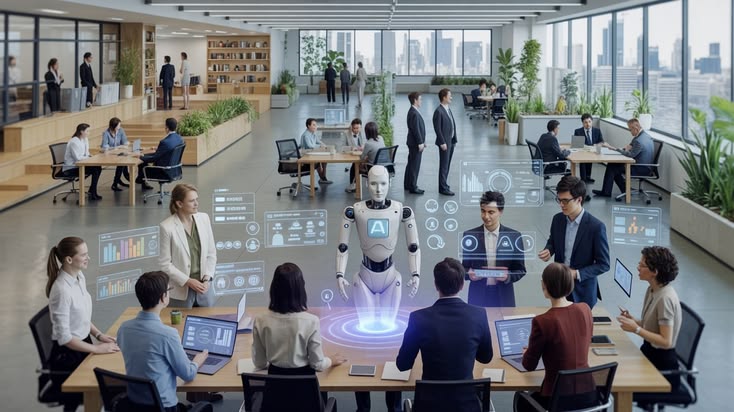
Robotics has become one of the most important technologies shaping modern manufacturing. From automotive production lines to electronics, food processing, pharmaceuticals, and warehouses, robots are helping manufacturers improve productivity, accuracy, safety, and consistency.
In the past, industrial robots were mainly used for repetitive tasks in large factories. Today, robotics has become more flexible and intelligent. Modern robots can work alongside humans, use cameras and sensors to understand their environment, and perform increasingly complex operations.
As manufacturing companies face rising competition, labor shortages, quality requirements, and pressure to produce goods faster, robotics is becoming an essential part of industrial transformation.
What Is Robotics in Manufacturing?
Robotics in manufacturing refers to the use of programmable machines to perform production-related tasks.
Industrial robots can be designed to move materials, assemble components, weld parts, paint products, inspect finished goods, package items, and perform many other activities.
Unlike traditional machinery that may perform only one fixed operation, many modern robots can be reprogrammed for different production needs.
This flexibility allows manufacturers to automate repetitive or difficult tasks while maintaining greater control over production quality.
How Robotics Has Changed Modern Manufacturing
Manufacturing automation has existed for decades, but robotics has significantly expanded what factories can automate.
Older industrial robots were often large machines operating behind safety barriers. They typically performed the same movement repeatedly with high speed and precision.
Modern robotic systems are much more advanced. They can include cameras, sensors, artificial intelligence, machine learning, and sophisticated control systems.
These technologies allow robots to respond to changing conditions rather than simply repeating a fixed sequence.
As a result, robotics is moving manufacturing from rigid production lines toward smarter and more flexible factories.
Increasing Production Efficiency
One of the main reasons manufacturers adopt robotics is to increase productivity.
Robots can perform repetitive tasks continuously with consistent speed and accuracy. This can reduce production delays and increase the number of products manufactured within a certain period.
For example, robots used in assembly operations can position components quickly and consistently. Automated material-handling robots can transport parts between different sections of a factory without requiring workers to repeatedly move heavy items.
Higher productivity can help manufacturers meet customer demand while making better use of equipment and production space.
Improving Product Quality
Quality control is essential in manufacturing because small errors can create defective products, wasted materials, and customer complaints.
Robots can improve consistency by performing the same operation with high precision.
In tasks such as welding, cutting, assembly, painting, and component placement, robotic systems can repeat movements accurately thousands of times.
Robotic inspection systems can also use cameras and sensors to detect problems such as incorrect dimensions, missing components, surface defects, or assembly errors.
By identifying problems earlier in the production process, manufacturers can reduce waste and improve overall product quality.
Making Manufacturing Workplaces Safer
Manufacturing environments can involve heavy machinery, high temperatures, hazardous materials, repetitive movements, and physically demanding tasks.
Robotics can improve worker safety by handling jobs that may create unnecessary risks for humans.
For example, robots can operate in areas involving extreme heat, heavy lifting, chemical exposure, or dangerous machinery.
Instead of replacing workers entirely, robots can take over the most hazardous parts of a process while employees supervise operations, maintain equipment, and perform tasks requiring human judgment.
This can reduce workplace injuries and create safer production environments.
The Growth of Collaborative Robots
Collaborative robots, often called cobots, represent an important development in industrial robotics.
Traditional industrial robots are usually separated from workers because their speed and strength can create safety risks.
Cobots are designed to operate more closely with people when appropriate safety systems and risk assessments are in place.
They are often used for tasks such as assembly assistance, packaging, inspection, machine loading, and material handling.
Cobots can be particularly useful for smaller manufacturers because they may require less production space and can often be adapted to different tasks more easily than traditional automation systems.
Robotics and Artificial Intelligence
Artificial intelligence is making manufacturing robots more capable.
Traditional industrial robots follow programmed instructions. AI-powered systems can potentially analyze sensor data, identify objects, detect patterns, and respond to changing conditions.
Computer vision allows robots to recognize components and inspect products. Machine-learning systems can help manufacturers identify unusual production patterns or improve processes over time.
For example, a vision-enabled robot may identify the position of randomly arranged objects and adjust its movements accordingly.
The combination of AI and robotics is helping factories become more adaptive and intelligent.
Automated Material Handling
Moving materials is a major part of manufacturing operations.
Factories need to transport raw materials, components, tools, and finished products between different production areas.
Autonomous mobile robots can assist with these activities.
Unlike traditional conveyor systems that follow fixed routes, mobile robots can navigate through manufacturing facilities using sensors and mapping technologies.
They can transport materials between workstations and automatically adjust their routes when necessary.
This can reduce unnecessary manual transportation and improve the flow of materials throughout the factory.
Robotics in Automotive Manufacturing
The automotive industry has been one of the largest users of industrial robotics.
Robots are commonly used for welding vehicle frames, painting components, assembling parts, handling heavy materials, and inspecting finished products.
Automobile manufacturing requires high precision because thousands of components must work together correctly.
Robotic systems help manufacturers perform repetitive assembly processes consistently while maintaining high production speeds.
As electric vehicles and advanced automotive technologies continue to develop, manufacturers are also using automation to support battery production and other specialized manufacturing processes.
Robotics in Electronics Manufacturing
Electronics manufacturing often involves extremely small and delicate components.
Robots can perform tasks that require high levels of precision, including component placement, assembly, soldering support, testing, packaging, and inspection.
Manufacturers of smartphones, computers, sensors, and electronic devices use automation to achieve consistent production quality.
Computer vision systems are especially valuable because they can inspect small components and identify manufacturing defects that may be difficult to detect quickly during manual inspection.
Robotics in Food and Beverage Manufacturing
Robotics is also becoming increasingly common in food production.
Robotic systems can help with sorting, packaging, palletizing, labeling, processing, and quality inspection.
Food manufacturers often operate in environments where cleanliness, consistency, and speed are extremely important.
Robotic automation can reduce unnecessary product handling while supporting efficient production and packaging.
Advanced vision systems can also help identify differences in product size, shape, or quality during processing.
Robotics in Pharmaceutical Manufacturing
Pharmaceutical production requires high accuracy, cleanliness, and strict quality control.
Robotics can help automate activities such as product handling, packaging, inspection, laboratory operations, and certain manufacturing processes.
Automated systems can reduce direct human interaction with sensitive products and help maintain controlled production environments.
Robots can also support repetitive laboratory tasks where accuracy and consistency are important.
However, pharmaceutical manufacturing remains highly regulated, meaning robotic systems must operate within strict quality and safety requirements.
Robotics and Smart Factories
Robotics is an important part of the smart factory concept.
A smart factory connects machines, robots, sensors, production systems, and software through digital networks.
Data from production equipment can be analyzed to understand factory performance and identify potential problems.
For example, sensors on robotic equipment can monitor temperature, vibration, movement, and operating conditions.
Manufacturers can use this information to determine whether equipment may require maintenance before a serious failure occurs.
The combination of robotics, artificial intelligence, cloud computing, sensors, and industrial data systems is helping create more connected manufacturing environments.
Predictive Maintenance and Robotics
Unexpected equipment failures can create major production delays.
Predictive maintenance uses sensor data and analytics to identify signs that machinery may be developing a problem.
Robotic systems can generate large amounts of operational data. Manufacturers can analyze this information to monitor equipment performance and identify unusual patterns.
Instead of replacing parts according to a fixed schedule, maintenance teams may be able to repair equipment when data indicates that maintenance is actually needed.
This approach can reduce unnecessary maintenance while helping prevent unexpected breakdowns.
Reducing Manufacturing Waste
Robotics can also help manufacturers use materials more efficiently.
Highly accurate robots can reduce mistakes during cutting, assembly, welding, painting, and other manufacturing operations.
Better precision means fewer defective products and less wasted material.
Robotic inspection systems can identify production problems earlier, allowing manufacturers to correct issues before large numbers of defective products are created.
Reducing waste can lower production costs and support more sustainable manufacturing practices.
The Impact of Robotics on Manufacturing Jobs
One of the most discussed questions surrounding robotics is its effect on employment.
Robots can automate certain repetitive and physically demanding tasks. This means some traditional manufacturing roles may change or decrease.
However, robotics also creates demand for different skills.
Factories using advanced automation need technicians, engineers, programmers, maintenance specialists, data analysts, and employees capable of operating robotic systems.
The future manufacturing workforce may therefore require more technical knowledge than previous generations of factory workers.
Training and education will be important for helping employees adapt to increasingly automated workplaces.
Challenges of Implementing Robotics
Robotic automation provides many benefits, but implementation can also be difficult.
Purchasing robotic equipment requires investment. Manufacturers may also need to redesign production processes, train employees, install safety systems, and maintain specialized equipment.
Integration can be especially challenging when companies operate older machinery that was not designed to communicate with modern robotic systems.
Cybersecurity is another concern because increasingly connected factories can create additional digital security risks.
Manufacturers must therefore carefully evaluate whether robotic automation is suitable for a particular production process.
Robotics for Small and Medium-Sized Manufacturers
Industrial robotics was once mainly associated with large corporations because robotic systems were expensive and complicated.
This situation is gradually changing.
More flexible robotic systems, collaborative robots, and easier programming tools are making automation more accessible to smaller manufacturers.
A small factory may not need to automate its entire production line. Instead, it can automate specific repetitive tasks that create production bottlenecks.
This gradual approach allows manufacturers to gain experience with robotics while controlling investment costs.
The Role of Humans in Robotic Manufacturing
Despite increasing automation, humans remain essential in manufacturing.
Robots are excellent at repetitive movements, precision, data processing, and certain dangerous activities.
Humans remain important for problem-solving, communication, creativity, supervision, maintenance, strategic decisions, and handling unexpected situations.
Modern manufacturing is therefore increasingly based on collaboration between people and machines.
The most effective factories will not necessarily be those with the highest number of robots. They will be those that use automation in areas where it provides genuine operational value.
The Future of Robotics in Manufacturing
The future of manufacturing robotics is likely to involve more intelligent, flexible, connected, and autonomous machines.
Robots will become better at recognizing objects, understanding their surroundings, working alongside people, and adapting to changing production requirements.
Artificial intelligence and computer vision will continue to expand robotic capabilities.
Manufacturers may also increasingly use digital simulations to test robotic production systems before installing them inside physical factories.
Robotics-as-a-service and other flexible business models may also make automation easier for companies that cannot afford large upfront investments.
As these technologies become more accessible, robotics could become common across factories of many different sizes.
How Robotics Supports Industry 4.0
Industry 4.0 describes the increasing integration of digital technologies into manufacturing.
Robotics plays an important role in this transformation.
Modern factories combine robotic automation with technologies such as artificial intelligence, industrial sensors, cloud computing, data analytics, digital twins, and connected production equipment.
The goal is to create manufacturing systems that can collect information, analyze performance, and respond more effectively to changing conditions.
Robots act as both physical machines and data-generating components within these connected factories.
Conclusion
Robotics is transforming manufacturing by improving productivity, precision, safety, flexibility, and quality.
Industrial robots can perform repetitive activities consistently, while collaborative robots allow people and machines to work more closely together. Artificial intelligence, computer vision, and sensor technologies are making robotic systems increasingly capable of handling complex manufacturing environments.
However, successful robotic automation requires careful planning. Manufacturers need to consider investment costs, workforce training, cybersecurity, maintenance, safety, and system integration.
Robotics is unlikely to remove humans from manufacturing completely. Instead, the future will increasingly involve people working alongside intelligent machines.
Companies that successfully combine human expertise with robotic automation may be better positioned to operate efficiently, respond to changing customer demand, and compete in the increasingly digital manufacturing industry.
Frequently Asked Questions About Robotics in Manufacturing
What is industrial robotics?
Industrial robotics refers to programmable robotic machines used to perform manufacturing activities such as assembly, welding, painting, inspection, packaging, and material handling.
These robots are designed to perform tasks accurately and repeatedly within industrial environments.
How is robotics changing manufacturing?
Robotics is helping manufacturers automate repetitive work, increase production speed, improve product consistency, reduce waste, and make hazardous activities safer.
Advanced robots can also use sensors, cameras, and artificial intelligence to respond to changing production conditions.
What are collaborative robots?
Collaborative robots, or cobots, are robots designed for closer interaction with human workers when properly configured and operated under appropriate safety measures.
They are commonly used for repetitive or physically demanding activities while employees handle tasks requiring greater judgment and flexibility.
What industries use manufacturing robots?
Manufacturing robots are used in automotive, electronics, aerospace, pharmaceuticals, food and beverage production, metalworking, plastics, consumer products, logistics, and many other industries.
Their applications continue to expand as robotic technology becomes more flexible.
How does AI improve industrial robots?
Artificial intelligence can help robots analyze information from cameras and sensors.
AI-powered systems may identify objects, detect defects, recognize production patterns, and adjust their actions according to changing conditions.
This makes robotic systems more adaptable than traditional machines that only follow fixed instructions.
Can robots completely replace factory workers?
Robots can automate many repetitive or hazardous activities, but manufacturing still requires human workers.
People are needed for supervision, maintenance, engineering, decision-making, quality management, problem-solving, and handling situations that automation cannot easily predict.
Are manufacturing robots expensive?
The cost varies depending on the size, complexity, application, software, installation requirements, and supporting equipment.
Traditional industrial automation can involve significant investment, while smaller collaborative robots and flexible systems may offer more accessible options for certain manufacturers.
What are autonomous mobile robots?
Autonomous mobile robots are machines that can navigate through facilities without relying entirely on fixed tracks or conveyor systems.
They are commonly used to transport materials, components, and products between different manufacturing areas.
How do robots improve manufacturing safety?
Robots can perform activities involving heavy lifting, dangerous machinery, repetitive movements, extreme temperatures, or hazardous environments.
This can reduce worker exposure to unnecessary risks while allowing employees to supervise or control operations from safer positions.
What is the future of robotics in manufacturing?
Manufacturing robots are expected to become more intelligent, flexible, connected, and easier to use.
Future systems will increasingly combine robotics with artificial intelligence, computer vision, industrial sensors, data analytics, and smart factory technologies.
The result will likely be manufacturing environments where humans and intelligent machines work together more closely to improve productivity and production quality.