

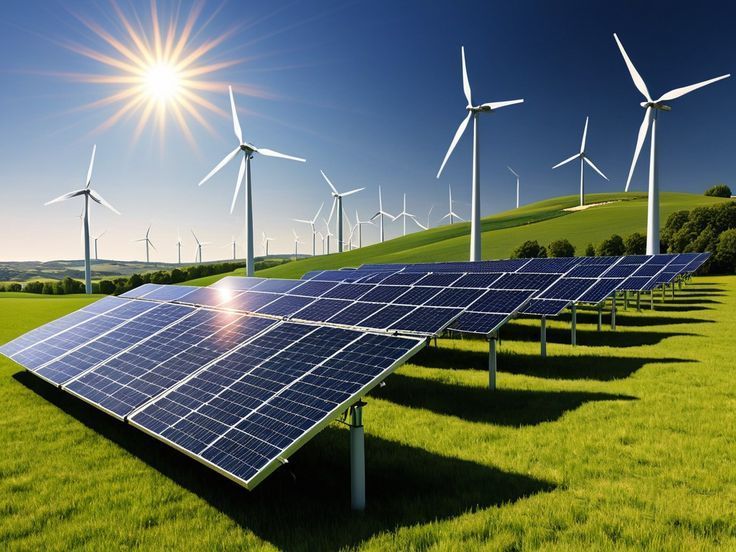
Renewable energy is becoming an increasingly important part of the global energy system. As countries look for ways to reduce greenhouse gas emissions, improve energy security, and meet growing electricity demand, technologies such as solar power, wind energy, hydropower, geothermal energy, and bioenergy are playing a larger role.
To understand why these technologies matter, it helps to understand the science behind them.
The science behind renewable energy is based on natural processes that continually provide usable forms of energy. Sunlight reaches Earth every day, wind is created by differences in atmospheric pressure and temperature, rivers flow because of the water cycle, heat is stored beneath the Earth’s surface, and organic materials can contain chemical energy produced through biological processes.
Renewable energy technologies capture these naturally replenished sources and convert them into electricity, heat, or useful fuels.
This guide explains how renewable energy works, the physics behind major renewable technologies, how energy is converted, why efficiency matters, and how renewable power can contribute to a cleaner and more sustainable energy future.
What Is Renewable Energy?
Renewable energy is energy produced from sources that are naturally replenished over relatively short periods.
Common renewable energy sources include solar energy, wind energy, hydropower, geothermal energy, and biomass.
These sources differ from fossil fuels such as coal, oil, and natural gas.
Fossil fuels formed over millions of years from ancient biological material. Once they are extracted and burned, they are not quickly replaced.
Renewable energy sources are continually restored through natural processes.
Sunlight returns each day.
Wind continues to move through the atmosphere.
Water circulates through evaporation, rainfall, rivers, and oceans.
Heat continues to exist beneath the Earth’s surface.
This continual replenishment is what makes these energy sources renewable.
Why Is Renewable Energy Important?
Modern society depends heavily on energy.
Electricity powers homes, businesses, hospitals, transportation systems, communication networks, factories, data centers, and public infrastructure.
Historically, much of that energy has come from fossil fuels.
Burning fossil fuels releases carbon dioxide and other pollutants.
Renewable energy provides a way to generate electricity and heat with lower direct greenhouse gas emissions in many applications.
It can also diversify energy supplies and reduce dependence on imported fuels.
Understanding the underlying science helps explain why different renewable technologies perform well in different locations and why no single energy source is suitable for every situation.
The Basic Science of Energy Conversion
Energy cannot simply be created from nothing.
Instead, it changes from one form into another.
This principle is described by the law of conservation of energy.
Renewable-energy systems work by converting naturally available energy into forms people can use.
Solar panels convert electromagnetic energy from sunlight into electrical energy.
Wind turbines convert the kinetic energy of moving air into mechanical rotation and then electricity.
Hydropower converts gravitational potential and kinetic energy in moving water into electrical power.
Geothermal systems use thermal energy stored inside the Earth.
Bioenergy converts chemical energy stored in organic material.
Every renewable technology is therefore an energy-conversion system.
What Is the Difference Between Energy and Power?
Energy and power are related but different concepts.
Energy is the total amount of work that can be performed or transferred.
Power describes how quickly energy is transferred.
Electricity use is often measured in kilowatt-hours, which is a unit of energy.
Power plants and generators are often rated in watts, kilowatts, megawatts, or gigawatts, which measure power.
For example, a solar installation may have a power rating of several megawatts, while the total electricity it produces over a year is measured in megawatt-hours.
Understanding this distinction is important when comparing renewable-energy technologies.
The Science Behind Solar Energy
Solar energy originates from the Sun.
Inside the Sun, nuclear fusion reactions combine hydrogen nuclei to form helium.
These reactions release enormous amounts of energy.
Some of that energy travels across space as electromagnetic radiation.
When sunlight reaches Earth, it carries energy across a range of wavelengths.
Solar technologies capture part of this radiation and convert it into useful energy.
The two main approaches are photovoltaic solar power and solar thermal energy.
How Do Solar Panels Work?
Solar photovoltaic panels convert sunlight directly into electricity.
Most modern solar cells are made using semiconductor materials such as silicon.
Semiconductors have electrical properties that allow them to behave differently from ordinary conductors or insulators.
When photons from sunlight strike a solar cell, they can transfer energy to electrons inside the semiconductor.
If enough energy is transferred, electrons can move into a state where they are able to flow through an electrical circuit.
The structure of the solar cell creates an internal electric field that directs this movement.
This process is known as the photovoltaic effect.
The movement of electrons produces direct-current electricity.
What Is the Photovoltaic Effect?
The photovoltaic effect is the physical process that allows solar cells to generate electricity from light.
A typical solar cell contains semiconductor layers with different electrical characteristics.
When sunlight reaches the material, photons interact with electrons.
Some electrons gain enough energy to become mobile.
The built-in electric field inside the cell pushes these electrons in a particular direction.
Metal contacts collect the flowing electrons.
When the circuit is connected, electrical current becomes available.
The amount of electricity produced depends on factors such as sunlight intensity, panel orientation, temperature, material quality, and system design.
Why Are Solar Panels Made From Silicon?
Silicon is widely used in solar cells because its semiconductor properties are well understood and it is relatively abundant.
Silicon atoms can be arranged into a crystal structure.
Manufacturers modify the electrical properties of silicon by adding small amounts of other elements through a process called doping.
Different doped layers create the electric field required for photovoltaic operation.
Silicon is not the only photovoltaic material.
Other technologies use materials such as cadmium telluride, copper indium gallium selenide, and perovskites.
Research continues into materials that may improve efficiency, reduce costs, or create lighter and more flexible solar cells.
Why Do Solar Panels Produce Direct Current?
Solar cells naturally produce direct current, commonly called DC.
In direct current, electrons flow in one main direction.
Most electrical grids and household systems use alternating current, known as AC.
An inverter converts the DC electricity produced by solar panels into AC electricity.
Modern inverters can also monitor system performance, adjust voltage, and help solar installations interact safely with the electrical grid.
The inverter is therefore one of the most important components of a photovoltaic system.
What Affects Solar Panel Efficiency?
Solar-panel efficiency describes how much incoming sunlight is converted into electrical energy.
No solar panel converts all sunlight into electricity.
Some light is reflected.
Some wavelengths do not have enough energy to free electrons effectively.
Other energy becomes heat.
Panel temperature also matters.
Many solar cells become slightly less efficient as they become hotter.
Materials, manufacturing quality, panel angle, shading, dust, and system design can all influence overall performance.
Improving conversion efficiency remains a major area of renewable-energy research.
How Does Solar Thermal Energy Work?
Solar thermal systems use sunlight to create heat rather than converting light directly into electricity.
Simple solar thermal systems can heat water for homes or businesses.
Larger concentrated solar power systems use mirrors to focus sunlight onto a receiver.
The concentrated sunlight heats a fluid.
That heat can then produce steam.
The steam drives a turbine connected to an electrical generator.
This means concentrated solar power uses the Sun as the original heat source while relying on familiar steam-turbine technology to produce electricity.
The Science Behind Wind Energy
Wind energy comes indirectly from the Sun.
The Sun heats different parts of Earth’s surface unevenly.
Land, water, mountains, and vegetation absorb and release heat differently.
These temperature differences create differences in air pressure.
Air tends to move from areas of higher pressure toward areas of lower pressure.
Earth’s rotation and local geography also influence wind patterns.
The result is moving air containing kinetic energy.
Wind turbines capture part of that kinetic energy and convert it into electricity.
How Do Wind Turbines Work?
Wind turbines use aerodynamic blades to extract energy from moving air.
When wind passes over the blades, differences in air pressure create lift.
This is similar to the aerodynamic principle that allows aircraft wings to generate lift.
The force causes the blades to rotate.
The blades are connected to a rotor.
The rotor transfers mechanical energy through the turbine’s drivetrain.
That mechanical rotation ultimately drives a generator.
The generator converts mechanical energy into electrical energy.
How Does a Generator Produce Electricity?
Electrical generators rely on electromagnetic induction.
When a conductor moves through a magnetic field, or when a magnetic field changes around a conductor, an electrical voltage can be produced.
This principle was famously demonstrated by Michael Faraday.
Inside a wind-turbine generator, magnets and conductive coils move relative to one another.
The rotating turbine provides the mechanical movement.
That movement causes changes in the magnetic field experienced by the conductors.
The result is electric current.
This same basic principle is used in many conventional power plants as well.
The major difference is what causes the generator to rotate.
Why Are Wind Turbine Blades So Large?
Larger blades can capture energy from a greater area of moving air.
The amount of wind power available depends strongly on both wind speed and the area swept by the turbine blades.
A larger rotor intercepts a larger volume of air.
This can allow the turbine to generate more electricity.
Modern wind turbines have become increasingly large because taller towers and longer blades can access stronger and more consistent winds.
Offshore turbines can be especially large because transportation and space limitations can be different from those on land.
Why Does Wind Speed Matter So Much?
The energy available in wind increases rapidly as wind speed rises.
Wind power is proportional to approximately the cube of wind speed.
This means that a relatively small increase in wind speed can create a much larger increase in available power.
For this reason, wind-resource assessment is extremely important before building a wind farm.
Developers measure wind conditions over long periods and at different heights.
A site with slightly stronger and more consistent wind can be much more productive than a nearby location with weaker conditions.
Can a Wind Turbine Capture All the Wind’s Energy?
No.
If a turbine removed all kinetic energy from the wind, the air behind the turbine would stop completely.
That would prevent additional air from flowing through the turbine.
Physics therefore places a theoretical limit on how much wind energy a turbine can capture.
This is known as the Betz limit.
It indicates that a wind turbine cannot capture more than about 59 percent of the kinetic energy passing through its rotor area.
Real turbines operate below this theoretical maximum because of additional aerodynamic and mechanical losses.
The Science Behind Hydropower
Hydropower uses the energy of moving water.
The water cycle is largely powered by solar energy.
Sunlight causes water to evaporate from oceans, rivers, lakes, and soil.
Water vapor rises and eventually falls as rain or snow.
Some of this water accumulates at higher elevations.
Because of gravity, elevated water contains gravitational potential energy.
When it flows downhill, this potential energy becomes kinetic energy.
Hydroelectric systems capture part of this moving-water energy.
How Do Hydroelectric Power Plants Work?
Many hydropower plants use dams to create reservoirs.
Water stored behind a dam has gravitational potential energy because it is located at a higher elevation than water downstream.
When water is released, it flows through pipes called penstocks.
The moving water turns a turbine.
The turbine rotates a generator.
The generator converts mechanical energy into electricity.
After passing through the turbine, the water continues downstream.
The electricity can then be transmitted through the electrical grid.
What Determines Hydropower Output?
Two major factors influence hydropower generation.
The first is the amount of water flowing through the system.
The second is the vertical difference in elevation, often called the head.
More water flow generally means more available energy.
A larger elevation difference also increases potential energy.
This is why hydropower plants are often located where significant water flow and elevation changes occur.
Seasonal rainfall, drought, snowmelt, and reservoir levels can all influence electricity production.
What Is Run-of-River Hydropower?
Run-of-river hydropower generates electricity using the natural flow of a river with less water storage than a large reservoir system.
Water is diverted through a channel or pipe and directed through turbines.
The water then returns to the river.
These systems can reduce some impacts associated with large reservoirs, although they can still affect river ecosystems.
Electricity production may also vary more directly with seasonal river flows.
Run-of-river systems demonstrate how hydropower can operate using several different engineering approaches.
Pumped Hydropower and Energy Storage
Pumped-storage hydropower functions partly as an energy-storage system.
When electricity supply is high and demand is lower, pumps move water from a lower reservoir to a higher reservoir.
This stores energy as gravitational potential energy.
When electricity is needed later, the water flows back downhill through turbines.
The turbines generate electricity.
Some energy is lost during the process, so pumped storage does not create new energy.
Instead, it shifts electricity from one period to another.
This can help balance electrical grids with large amounts of variable renewable generation.
The Science Behind Geothermal Energy
Geothermal energy comes from heat inside the Earth.
Some of this heat remains from the planet’s formation billions of years ago.
Additional heat is generated by the radioactive decay of naturally occurring elements in rocks.
Temperatures generally increase deeper beneath Earth’s surface.
In certain locations, underground heat is close enough to the surface to be accessed economically.
Geothermal systems use this heat for electricity generation or direct heating.
How Do Geothermal Power Plants Work?
Geothermal power plants use underground reservoirs of hot water or steam.
Wells are drilled into geothermal formations.
Hot fluid is brought toward the surface.
Depending on the plant design, steam may directly turn a turbine or heat may be transferred to another working fluid.
The turbine then drives an electrical generator.
After energy is extracted, cooled geothermal water may be injected back underground.
Reinjection can help maintain reservoir pressure and reduce the need to dispose of large quantities of geothermal fluids.
What Are Ground-Source Heat Pumps?
Ground-source heat pumps use relatively stable underground temperatures to heat and cool buildings.
They are different from geothermal power plants.
A heat pump transfers heat rather than producing heat through combustion.
During winter, the system can move heat from the ground into a building.
During summer, the process can be reversed, moving heat from the building into the ground.
Because underground temperatures are often more stable than outdoor air temperatures, these systems can operate efficiently.
They still require electricity, but they can significantly reduce the energy needed for heating and cooling in suitable locations.
The Science Behind Bioenergy
Bioenergy comes from organic material known as biomass.
Plants capture solar energy through photosynthesis.
During photosynthesis, plants use sunlight to convert carbon dioxide and water into energy-rich chemical compounds.
This chemical energy becomes stored in plant material.
Wood, agricultural residues, crops, food waste, and certain forms of animal waste can therefore contain usable energy.
Bioenergy technologies release or convert this stored chemical energy.
How Does Biomass Produce Energy?
Biomass can be burned directly to create heat.
That heat can warm buildings or produce steam for electricity generation.
Biomass can also be processed into fuels.
For example, plant sugars may be fermented to create ethanol.
Vegetable oils or animal fats can be processed into biodiesel.
Organic waste can decompose in oxygen-free environments to produce biogas containing methane.
These fuels can then be used for transportation, heating, or electricity generation.
Is Biomass Always Renewable?
Biomass can be renewable, but sustainability depends on how it is produced and managed.
If forests are harvested faster than they regrow, biomass use may not be sustainable.
Land-use changes can also affect biodiversity and carbon storage.
Growing energy crops may compete with food production or water use in some regions.
Transporting and processing biomass also requires energy.
For these reasons, bioenergy sustainability depends on the complete life cycle rather than simply whether the original material came from a plant.
How Does Biogas Work?
Biogas is produced when microorganisms break down organic matter without oxygen.
This process is called anaerobic digestion.
Materials such as food waste, sewage, agricultural residues, and animal manure can be placed in sealed digesters.
Microorganisms break down the material and produce a gas mixture containing methane and carbon dioxide.
The methane can be burned for heat or electricity.
Biogas can also be purified into biomethane for use in certain gas systems or vehicles.
The remaining material can sometimes be used as fertilizer depending on its composition and treatment.
What Is Ocean Energy?
Oceans contain several forms of renewable energy.
Tidal energy uses the movement of water caused primarily by gravitational interactions between Earth, the Moon, and the Sun.
Wave energy captures energy from surface waves created mainly by wind.
Ocean thermal energy systems can use temperature differences between warm surface water and colder deep water.
These technologies are generally less widely deployed than solar, wind, or hydropower.
However, they demonstrate that the natural movement and thermal structure of oceans contain substantial energy.
How Does Tidal Energy Work?
Tides rise and fall predictably because of gravitational forces.
Tidal-energy systems can capture this movement.
Some designs resemble underwater wind turbines.
Moving tidal currents rotate blades that drive generators.
Other systems use tidal barrages that create a difference in water level between areas.
Water flows through turbines as the tide changes.
One advantage of tidal energy is predictability.
Unlike wind or sunlight, tidal cycles can be forecast very accurately.
The Science of Energy Efficiency
Every energy-conversion system loses some usable energy.
This is a consequence of thermodynamics and real-world engineering limitations.
Some energy becomes heat.
Some is lost through friction.
Electrical resistance creates additional losses.
Renewable technologies therefore have efficiency ratings.
However, efficiency alone does not determine whether a technology is useful.
A lower-efficiency energy source can still be attractive when the original energy source is abundant and free.
Solar panels provide a good example.
They do not convert all sunlight into electricity, but sunlight itself does not need to be purchased as fuel.
What Is Capacity Factor?
Capacity factor measures how much electricity a power plant actually produces compared with what it would produce if it operated at maximum rated output continuously.
A solar farm cannot produce at maximum power during nighttime.
Clouds and seasonal changes also influence output.
Wind turbines depend on wind conditions.
Hydropower depends on water availability.
Geothermal plants can often operate more continuously.
Capacity factor therefore helps compare how different power sources perform over time.
It is different from conversion efficiency.
Why Are Solar and Wind Called Variable Renewable Energy?
Solar and wind output depend on changing environmental conditions.
Solar generation varies with daylight, clouds, seasons, and geographic location.
Wind generation changes as wind speed changes.
This variability means electricity production does not always occur exactly when demand is highest.
Electrical grids need flexibility to manage these changes.
Solutions can include energy storage, transmission, demand management, flexible power plants, geographic diversity, and better forecasting.
Managing variability is one of the central engineering challenges of modern renewable-energy systems.
How Does Battery Storage Support Renewable Energy?
Batteries store electrical energy in chemical form.
When electricity is available, chemical reactions inside the battery store energy.
When electricity is needed, the reactions produce electrical current.
Battery storage can absorb excess solar or wind generation and release it later.
For example, solar electricity generated during the afternoon can potentially be stored and used after sunset.
Large battery systems can also respond very quickly to changes in grid conditions.
This makes them useful for stabilizing electricity networks.
How Do Lithium-Ion Batteries Work?
Lithium-ion batteries contain two electrodes, an electrolyte, and a separator.
During charging, lithium ions move from one electrode toward the other.
Electrons travel through an external circuit.
During discharge, the process reverses.
The movement of electrons through the external circuit provides usable electrical power.
Lithium-ion batteries are widely used because they combine relatively high energy density, good efficiency, and fast response.
Researchers continue to develop alternative battery chemistries that may offer lower costs, longer lifetimes, or reduced dependence on certain materials.
Other Forms of Renewable Energy Storage
Batteries are not the only storage technology.
Pumped hydropower stores energy by moving water uphill.
Compressed-air systems store energy by compressing air.
Thermal storage stores energy as heat or cold.
Hydrogen can store energy in chemical form.
Flywheels store energy in rotating masses.
Each technology has different advantages.
Some are better for short-term grid balancing.
Others may be more suitable for storing energy over many hours, days, or potentially longer periods.
What Is Green Hydrogen?
Hydrogen is not a primary energy source like sunlight or wind.
It is an energy carrier.
Hydrogen can be produced by using electricity to split water molecules into hydrogen and oxygen through electrolysis.
When the electricity comes from renewable sources, the resulting hydrogen is often called green hydrogen.
Hydrogen can later be used in fuel cells, industrial processes, energy storage, or certain transportation applications.
Producing and converting hydrogen involves energy losses, so it is unlikely to replace direct electricity in every application.
Its greatest potential may be in sectors that are difficult to electrify directly.
How Do Fuel Cells Work?
Fuel cells convert chemical energy directly into electricity through electrochemical reactions.
A hydrogen fuel cell combines hydrogen with oxygen.
The process produces electricity, water, and heat.
Unlike combustion engines, fuel cells do not need to burn the hydrogen.
Because the conversion is electrochemical, fuel cells can operate efficiently and with very low local pollution when pure hydrogen is used.
The overall environmental impact depends heavily on how the hydrogen was produced.
Why Electricity Grids Matter for Renewable Energy
Renewable-energy generation is only useful if electricity can reach consumers when and where it is needed.
Electrical grids connect power plants, storage systems, businesses, and homes.
As renewable generation increases, grids may require new transmission lines, improved control systems, storage, and greater flexibility.
A sunny region may produce large amounts of solar electricity while a windy region generates power at different times.
Transmission networks can move electricity between these areas.
A stronger and more interconnected grid can therefore help balance renewable resources.
How Does Electricity Travel Through the Grid?
Electricity generated at power plants is sent through transformers that increase voltage.
Higher voltage reduces energy losses when electricity travels long distances.
Transmission lines carry electricity across regions.
Closer to consumers, substations reduce the voltage.
Distribution networks then deliver electricity to homes and businesses.
Renewable energy uses the same basic electrical infrastructure as other generation technologies.
The challenge is ensuring the grid can manage changing amounts of generation from many different sources.
What Is a Smart Grid?
A smart grid uses digital technology, sensors, communication systems, and automated controls to manage electricity more effectively.
Traditional grids were designed primarily around large centralized power plants.
Modern energy systems increasingly include rooftop solar, batteries, electric vehicles, wind farms, and flexible loads.
Smart grids can monitor supply and demand in real time.
They can help manage distributed energy resources and detect problems more quickly.
Digital control is becoming increasingly important as electricity systems become more complex.
How Does Weather Forecasting Support Renewable Energy?
Weather forecasting helps grid operators predict renewable-energy generation.
Cloud forecasts can estimate future solar output.
Wind forecasts can estimate electricity from wind farms.
Improved forecasting makes renewable power easier to integrate because electricity systems can prepare for expected changes.
Artificial intelligence and advanced numerical weather models are improving these predictions.
More accurate forecasts reduce uncertainty and help power systems operate more efficiently.
Why Location Matters for Renewable Energy
Renewable resources vary significantly by geography.
Desert regions may receive intense sunlight.
Coastal regions may have strong winds.
Mountainous areas with major rivers may have excellent hydropower potential.
Volcanically active regions may contain accessible geothermal resources.
Agricultural regions may have large amounts of biomass residues.
Choosing the right technology therefore requires understanding local natural resources.
Renewable energy is highly location-dependent.
A technology that performs extremely well in one region may be economically impractical in another.
What Is Energy Density?
Energy density describes how much energy is available within a particular amount of mass, volume, or area.
Fossil fuels contain large amounts of chemical energy in relatively small volumes.
Renewable sources such as sunlight and wind are more diffuse.
This means solar and wind installations may require larger areas to collect significant amounts of energy.
However, renewable sources do not require continuous fuel extraction.
Energy density is therefore one of several factors that engineers consider when designing energy systems.
What Is Life-Cycle Analysis?
Life-cycle analysis evaluates environmental impacts across the entire lifetime of a technology.
For renewable energy, this can include extracting raw materials, manufacturing equipment, transportation, construction, operation, maintenance, and disposal or recycling.
Solar panels and wind turbines may produce electricity without burning fuel, but producing the equipment still requires materials and energy.
Life-cycle analysis provides a more complete picture than looking only at emissions during operation.
Renewable technologies generally have lower life-cycle greenhouse gas emissions than fossil-fuel generation, although exact results vary by technology and location.
Do Renewable Energy Systems Produce Emissions?
Renewable-energy systems can have environmental impacts.
Manufacturing solar panels requires minerals, energy, and industrial processes.
Wind turbines require steel, concrete, composites, and other materials.
Hydropower dams can alter river ecosystems.
Bioenergy can produce air pollution when fuels are burned.
The important distinction is that many renewable technologies produce much lower greenhouse gas emissions over their full life cycle than fossil-fuel systems.
Sustainable energy planning still requires considering land, materials, ecosystems, recycling, and local communities.
Why Materials Matter in Renewable Energy
Renewable technologies depend on physical materials.
Solar panels use glass, aluminum, silicon, copper, and other materials.
Wind turbines require steel, concrete, copper, and composite blades.
Batteries may require lithium, iron, nickel, graphite, or other minerals depending on chemistry.
Expanding renewable energy therefore creates demand for mining, processing, manufacturing, and recycling.
Future sustainability will partly depend on using materials more efficiently and developing stronger recycling systems.
Can Solar Panels Be Recycled?
Many solar-panel materials can potentially be recovered.
Glass and aluminum represent a large portion of conventional panel mass.
Other valuable materials may also be recovered depending on recycling technology.
The challenge is developing recycling systems that are technically effective and economically practical.
As older solar installations reach the end of their useful lives, recycling is likely to become increasingly important.
Designing panels for easier material recovery may improve future sustainability.
Can Wind Turbines Be Recycled?
Many wind-turbine components are already recyclable.
Steel towers, copper wiring, and some mechanical components can enter established recycling systems.
Composite turbine blades are more difficult because they contain materials bonded together for strength and durability.
Researchers and manufacturers are developing recyclable blade materials and new ways to reuse old blades.
Improving end-of-life management is becoming an important part of wind-energy sustainability.
Why Renewable Energy Costs Have Fallen
Renewable-energy costs can decline as technology improves and manufacturing expands.
Larger production volumes can reduce manufacturing costs.
Improved designs increase efficiency.
Supply chains become more specialized.
Installation practices become faster.
Competition encourages innovation.
This process is sometimes described through learning curves.
As cumulative production increases, the cost of producing each additional unit can decrease.
Solar panels and wind turbines have experienced substantial improvements through this process.
How Does Renewable Energy Reduce Fuel Costs?
Many renewable technologies do not require continuous fuel purchases.
A solar farm needs sunlight, but nobody has to purchase sunlight.
A wind farm uses moving air without buying wind.
Hydropower uses flowing water.
This changes the economics of energy generation.
The major costs are often associated with building, financing, maintaining, and eventually replacing equipment.
Fuel price volatility becomes less important.
This can provide greater predictability once a renewable facility is operating.
Renewable Energy and Energy Security
Energy security refers to reliable access to affordable energy.
Countries that depend heavily on imported oil, gas, or coal can be vulnerable to international supply disruptions and price changes.
Locally available renewable resources can diversify energy supply.
Solar, wind, hydropower, geothermal, and domestic bioenergy can reduce dependence on imported fuels in some regions.
However, renewable technologies also depend on international supply chains for equipment and minerals.
Energy security therefore involves both fuel independence and resilient technology supply chains.
Renewable Energy and Electric Vehicles
Electric vehicles can increase electricity demand while also reducing direct dependence on gasoline or diesel.
When electric vehicles are charged using low-carbon electricity, their overall emissions can be reduced.
EV batteries may eventually play a role in electricity-grid management.
Vehicle-to-grid technology could allow parked vehicles to provide electricity back to the grid during certain periods.
This concept remains under development and depends on charging infrastructure, battery management, regulations, and consumer behavior.
Transportation and electricity systems may therefore become increasingly connected.
Renewable Energy and Buildings
Buildings can both consume and generate renewable energy.
Rooftop solar panels can produce electricity.
Solar thermal systems can heat water.
Heat pumps can provide efficient heating and cooling.
Battery systems can store electricity.
Improved insulation can reduce total energy demand.
Future buildings may increasingly operate as active parts of the electrical grid rather than simply passive consumers.
Smart controls could adjust energy use based on electricity prices, weather, and renewable generation.
Renewable Energy and Industry
Industrial processes consume large amounts of energy.
Some activities can be electrified directly.
Others require high-temperature heat or chemical feedstocks that are more difficult to replace.
Renewable electricity, hydrogen, bioenergy, and thermal storage may all play roles in industrial decarbonization.
Different industries will require different solutions.
Steel production, cement, chemicals, food processing, and manufacturing have very different energy needs.
The science of renewable energy therefore extends beyond electricity generation alone.
Why Energy Efficiency Still Matters
Renewable energy becomes easier to deploy when total energy demand is lower.
Energy efficiency reduces the amount of energy required to provide the same service.
Efficient buildings require less heating and cooling.
Efficient motors use less electricity.
LED lighting uses less power than older lighting technologies.
Better industrial processes can reduce energy waste.
Efficiency and renewable energy work together.
Generating clean electricity is important, but avoiding unnecessary energy use can reduce the amount of infrastructure required.
The Role of Thermodynamics in Renewable Energy
Thermodynamics describes relationships between heat, energy, and work.
It places important limits on energy-conversion systems.
Heat engines, including many geothermal, biomass, and concentrated solar power plants, cannot convert all thermal energy into electricity.
Some energy must leave the system as waste heat.
Temperature differences strongly influence efficiency.
These limitations are not engineering failures.
They are consequences of physical laws.
Understanding thermodynamics helps engineers design more effective renewable-energy systems.
Why No Energy Technology Is 100 Percent Efficient
Every real energy system contains losses.
Electrical wires have resistance.
Mechanical parts experience friction.
Inverters generate heat.
Turbines create turbulence.
Batteries lose energy during charging and discharging.
These losses mean that useful output is always less than the total energy entering the system.
Engineers work to reduce losses, but eliminating them completely is impossible.
The goal is therefore improving efficiency while keeping the technology reliable and affordable.
The Importance of Energy Storage for the Future
Energy storage becomes increasingly valuable as electricity systems include larger amounts of variable renewable power.
Storage can move energy through time.
Solar electricity generated at midday can be stored for evening use.
Wind electricity produced during periods of low demand can be saved for later.
Different storage technologies may operate over different timescales.
Batteries can respond rapidly.
Pumped storage can provide large amounts of energy.
Hydrogen or other chemical fuels may eventually support longer-duration storage.
Future power systems will likely use a combination of technologies.
Renewable Energy and Grid Stability
Electrical grids must maintain a constant balance between electricity supply and demand.
If supply and demand become significantly unbalanced, frequency and voltage can move outside safe limits.
Traditional power plants provide certain grid-stabilizing characteristics through large rotating generators.
Modern renewable systems use advanced power electronics to provide similar or new types of grid services.
Battery systems can respond particularly quickly.
Grid-forming inverters are another developing technology that can help renewable-heavy grids remain stable.
The physics of electricity-system stability is therefore becoming increasingly important.
Can the World Run Entirely on Renewable Energy?
Theoretically, renewable resources are enormous.
The practical challenge involves engineering, economics, geography, storage, transmission, materials, reliability, and policy.
Some regions may be able to operate with very high shares of renewable electricity.
Others may require different combinations of renewable power, storage, transmission, nuclear energy, flexible generation, or other low-carbon technologies.
The appropriate energy mix depends on local circumstances.
The important scientific question is not simply whether renewable energy exists in sufficient quantity.
It is how to build reliable systems that deliver energy continuously and affordably.
The Future of Renewable Energy Technology
Renewable-energy science continues to advance.
Solar researchers are developing higher-efficiency cells and new materials.
Wind turbines are becoming larger and more efficient.
Battery chemistry is evolving.
Geothermal developers are exploring new drilling techniques.
Green hydrogen production is improving.
Artificial intelligence is helping optimize electricity systems.
Recycling technologies are also becoming more important.
Future progress will likely come from many incremental improvements rather than one single breakthrough.
The Role of Artificial Intelligence in Renewable Energy
Artificial intelligence can analyze large amounts of energy and weather data.
AI systems may improve solar and wind forecasting, battery management, grid operation, equipment maintenance, and electricity-demand prediction.
For example, machine-learning models can identify patterns that indicate a wind turbine may require maintenance before a serious failure occurs.
AI can also help determine when batteries should charge or discharge.
These systems do not change the fundamental physics of renewable energy.
They improve the way technologies are monitored and managed.
The Importance of Renewable Energy Research
Research continues to improve performance, durability, cost, and sustainability.
Scientists investigate new photovoltaic materials.
Engineers develop larger wind turbines.
Chemists study improved battery systems.
Geologists explore enhanced geothermal technologies.
Materials scientists work on recycling and lower-impact manufacturing.
Energy-system researchers develop better grid models.
Continued research is essential because future energy systems will need to become more efficient, affordable, reliable, and resource-conscious.
Benefits of Renewable Energy
Renewable energy can provide several major benefits.
It can reduce dependence on fossil-fuel combustion.
It can lower greenhouse gas emissions.
It can diversify energy supplies.
It can support local electricity generation.
It can provide power in locations without large centralized fuel infrastructure.
Renewable technologies can also create opportunities for innovation, manufacturing, engineering, construction, and scientific research.
The specific benefits depend on the technology and how it is deployed.
Challenges of Renewable Energy
Renewable energy also has limitations.
Solar and wind generation are variable.
Large projects require land and infrastructure.
Transmission networks may need expansion.
Energy storage can increase system costs.
Manufacturing requires minerals and industrial materials.
Some projects can affect ecosystems or local communities.
Responsible renewable-energy development requires acknowledging these challenges.
The goal is not to assume every renewable project is automatically beneficial.
It is to design energy systems that balance environmental, economic, engineering, and social considerations.
Why Renewable Energy Science Matters
Understanding the science behind renewable energy helps explain both its potential and its limitations.
Solar panels do not create energy from nothing.
They convert electromagnetic radiation into electricity.
Wind turbines capture kinetic energy.
Hydropower uses gravity and moving water.
Geothermal systems use underground heat.
Bioenergy relies on chemical energy created through biological processes.
Every technology operates according to established physical laws.
This scientific understanding makes it easier to evaluate claims about energy realistically.
Final Thoughts
Understanding the science behind renewable energy reveals that renewable power is fundamentally about capturing natural energy flows and converting them into useful forms.
Solar energy begins with nuclear fusion inside the Sun and reaches Earth as electromagnetic radiation.
Wind energy originates largely from uneven solar heating of the atmosphere.
Hydropower depends on the Sun-driven water cycle and gravity.
Geothermal energy comes from heat stored inside the Earth.
Bioenergy stores solar energy through photosynthesis.
Modern engineering makes these natural processes useful by combining physics, chemistry, materials science, electronics, computer science, and energy-system design.
Renewable energy is not completely free from environmental impacts or technical limitations. Solar panels require materials. Wind turbines need large structures. Hydropower can alter ecosystems. Batteries require minerals. Electrical grids need major investment.
However, renewable technologies provide powerful tools for producing energy with lower dependence on finite fossil fuels.
The future of renewable energy will depend on improving efficiency, expanding storage, strengthening electrical grids, reducing material impacts, increasing recycling, and developing technologies that can provide reliable energy at reasonable cost.
The science already makes large-scale renewable energy possible.
The next challenge is designing energy systems that use that science effectively, sustainably, and reliably.
Frequently Asked Questions About Renewable Energy
What is renewable energy?
Renewable energy is energy produced from naturally replenished sources such as sunlight, wind, flowing water, geothermal heat, and organic materials.
How does renewable energy work?
Renewable-energy technologies capture naturally available energy and convert it into useful forms such as electricity, heat, or fuel.
Why is renewable energy called renewable?
It is called renewable because its energy sources are naturally replenished. Sunlight, wind, water cycles, and geothermal heat continue to provide energy over time.
What are the main types of renewable energy?
The main types include solar energy, wind energy, hydropower, geothermal energy, biomass, and ocean energy.
How do solar panels generate electricity?
Solar panels use semiconductor materials that release mobile electrons when photons from sunlight transfer energy to them. The resulting electron flow creates electricity.
What is the photovoltaic effect?
The photovoltaic effect is the process in which light causes electrical voltage and current to develop in certain semiconductor materials.
Why do solar panels need an inverter?
Solar panels produce direct-current electricity, while most electrical grids and buildings use alternating current. An inverter converts DC electricity into AC electricity.
How do wind turbines generate electricity?
Wind turns aerodynamic blades, which rotate a mechanical drivetrain connected to a generator. The generator converts mechanical energy into electrical energy.
What creates wind?
Wind is created mainly by uneven heating of Earth’s surface, which produces differences in temperature and atmospheric pressure.
What is the Betz limit?
The Betz limit is a theoretical limit stating that a wind turbine cannot capture more than about 59 percent of the kinetic energy passing through its rotor.
How does hydropower generate electricity?
Flowing or falling water turns a turbine connected to a generator. The generator converts the turbine’s mechanical energy into electricity.
Where does hydropower energy originally come from?
Much of hydropower’s energy ultimately comes from the Sun, which drives evaporation and the water cycle, while gravity causes water to flow downhill.
How does geothermal energy work?
Geothermal systems use heat stored beneath Earth’s surface. Hot water or steam can provide direct heating or drive turbines that generate electricity.
What is biomass energy?
Biomass energy comes from organic material such as wood, crops, agricultural residues, food waste, and certain animal wastes.
How is solar energy stored in plants?
Plants use photosynthesis to convert sunlight into chemical energy stored in organic molecules.
What is biogas?
Biogas is a fuel produced when microorganisms break down organic material without oxygen. It typically contains methane and carbon dioxide.
What is renewable-energy efficiency?
Efficiency measures how much input energy a system converts into useful output energy.
Why are renewable-energy systems not 100 percent efficient?
Some energy is always lost through heat, friction, electrical resistance, reflection, turbulence, and other physical processes.
What is capacity factor?
Capacity factor compares the electricity a power plant actually produces over time with the amount it would produce if it operated continuously at maximum rated output.
Why are solar and wind considered variable energy sources?
Their output changes according to sunlight and wind conditions, so electricity generation is not constant.
How does battery storage help renewable energy?
Batteries store electricity when production is high and release it later when electricity is needed.
What is pumped-storage hydropower?
Pumped storage uses electricity to move water uphill into a reservoir. The water later flows downhill through turbines to regenerate electricity.
What is green hydrogen?
Green hydrogen is hydrogen produced through water electrolysis using electricity from renewable energy sources.
Is hydrogen a renewable energy source?
Hydrogen is better described as an energy carrier. Its environmental impact depends on how it is produced.
How do fuel cells generate electricity?
Fuel cells use electrochemical reactions to convert hydrogen and oxygen into electricity, water, and heat.
Why do renewable-energy systems need electricity grids?
Grids transport electricity from power generators to consumers and help balance changing supply and demand.
What is a smart grid?
A smart grid uses digital monitoring, communication, sensors, and automated controls to manage electricity systems more efficiently.
Can renewable energy be stored?
Yes. Energy can be stored using batteries, pumped hydropower, thermal storage, compressed air, hydrogen, and other technologies.
Does renewable energy produce carbon emissions?
Renewable-energy technologies can produce emissions during manufacturing, construction, transportation, and disposal, but many have much lower life-cycle greenhouse gas emissions than fossil-fuel generation.
Are solar panels recyclable?
Many components, including glass and aluminum, can be recovered. Recycling technologies are continuing to improve for additional panel materials.
Are wind turbines recyclable?
Much of a wind turbine can be recycled, particularly steel and metals. Composite blades remain more challenging, although new recycling methods are being developed.
Why is renewable energy location-dependent?
Different regions have different levels of sunlight, wind, rainfall, rivers, geothermal heat, biomass, and available land.
What role does weather forecasting play in renewable energy?
Forecasting helps predict solar and wind generation so electricity-grid operators can plan supply, storage, and backup resources.
What is life-cycle analysis in renewable energy?
Life-cycle analysis examines environmental impacts from raw-material extraction through manufacturing, operation, maintenance, and end-of-life disposal or recycling.
Can renewable energy power electric vehicles?
Yes. Electric vehicles can be charged with electricity generated from renewable sources such as solar, wind, hydropower, or geothermal energy.
Can renewable energy power homes?
Yes. Homes can use renewable electricity from the grid or technologies such as rooftop solar, solar water heating, heat pumps, and battery storage.
Can the world rely entirely on renewable energy?
Very high levels of renewable energy are technically possible in many electricity systems, but achieving reliable supply requires storage, transmission, flexible demand, grid improvements, and careful planning.
What is the biggest challenge with renewable energy?
Major challenges include variability, energy storage, transmission infrastructure, materials, financing, land use, permitting, and maintaining reliable electricity supply.
What is the future of renewable energy?
The future is likely to involve more efficient solar panels, larger wind turbines, improved energy storage, stronger grids, green hydrogen, advanced geothermal systems, smarter energy management, and greater recycling.
Why is understanding renewable-energy science important?
Understanding the science makes it easier to evaluate how technologies work, what their limitations are, and how they can contribute to reliable and sustainable energy systems.