

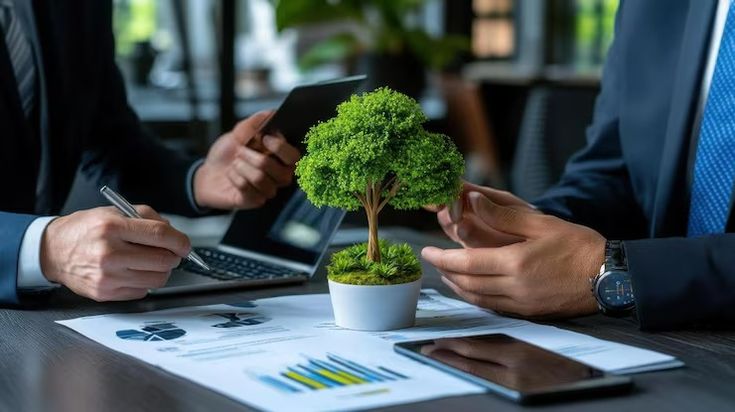
Sustainable business practices are becoming increasingly important for companies that want to remain competitive, resilient, and profitable over the long term. Sustainability is no longer limited to environmental protection or corporate charity. It now influences business strategy, operational efficiency, risk management, employee relations, investment decisions, supply chains, and customer trust.
A sustainable company considers how its activities affect the environment, employees, customers, communities, suppliers, and future generations. It seeks to generate financial value without depending on practices that damage natural resources, exploit people, or create unacceptable long-term risks.
The OECD defines corporate sustainability as the integration of environmental and social considerations into business strategy and operations. Strong governance, transparency, and accountability also help businesses attract patient capital and support long-term economic growth.
For modern organisations, sustainability is not simply about appearing responsible. It is about building a business model that can continue operating successfully in changing economic, environmental, technological, and regulatory conditions.
What Are Sustainable Business Practices?
Sustainable business practices are policies, decisions, and operational methods designed to create lasting economic value while managing environmental and social impacts.
These practices may include reducing energy consumption, preventing waste, sourcing materials responsibly, protecting employee rights, improving product durability, strengthening governance, and reporting sustainability performance accurately.
A sustainable business normally considers three connected areas:
- Environmental responsibility
- Social responsibility
- Economic and governance responsibility
These areas are sometimes described as people, planet, and profit. The purpose is not to reduce profitability but to achieve growth without creating risks that could weaken the company in the future.
Why Sustainability Matters for Long-Term Growth
Companies operate within environmental, social, and economic systems. They depend on natural resources, infrastructure, skilled employees, customers, suppliers, stable communities, and functioning institutions.
When these systems are damaged or unstable, businesses face higher costs and greater uncertainty. Resource shortages may disrupt production. Poor labour practices can create legal and reputational problems. Climate-related events may damage facilities or interrupt supply chains. Weak governance can result in fraud, corruption, and loss of investor confidence.
Sustainable business practices help companies identify and manage these risks before they become serious threats.
The United Nations Global Compact states that integrating responsible principles into corporate strategies, policies, and procedures creates a foundation for long-term business success.
Sustainability can therefore support long-term growth by improving efficiency, protecting resources, strengthening stakeholder relationships, encouraging innovation, and reducing exposure to operational and regulatory risks.
Integrating Sustainability into Business Strategy
Sustainability is most effective when it forms part of the organisation’s main business strategy rather than being treated as a separate project.
Senior leaders should determine which environmental and social issues are most relevant to the company’s operations, industry, customers, and financial performance. A manufacturing company may focus on energy, materials, emissions, and worker safety. A technology company may prioritise data privacy, electronic waste, energy use, and responsible artificial intelligence.
The business should then establish specific objectives, assign responsibility, allocate resources, and monitor progress.
A company might set goals to reduce energy use, improve supplier standards, increase employee retention, redesign products, or reduce packaging. These goals should be connected to operational and financial planning.
The UN Global Compact has highlighted that embedding sustainability into business and brand strategy can strengthen resilience, encourage innovation, and create a stronger foundation for long-term growth.
Improving Energy Efficiency
Energy efficiency is one of the most practical sustainable business strategies.
Businesses can reduce energy consumption by upgrading lighting, improving insulation, maintaining machinery, installing efficient heating and cooling systems, and using energy-management software.
Companies may also generate or purchase renewable electricity from solar, wind, hydroelectric, or other low-carbon sources.
Reducing energy use can lower operating expenses while decreasing greenhouse gas emissions. It may also protect the business from volatile fossil-fuel prices and future carbon-related regulations.
Energy efficiency should be measured carefully. Businesses need to understand which departments, facilities, or production processes consume the most energy before selecting improvement projects.
Reducing Waste and Supporting a Circular Economy
Traditional business models often follow a linear process: resources are extracted, products are manufactured, goods are consumed, and waste is discarded.
A circular economy aims to keep materials and products in use for as long as possible. It encourages companies to design products that can be repaired, reused, remanufactured, or recycled.
Businesses can reduce waste by improving production accuracy, avoiding unnecessary packaging, reusing materials, recycling industrial by-products, and working with suppliers to reduce disposable components.
Product design is particularly important. A durable and repairable product may use fewer resources over its lifetime than one that must be replaced frequently.
Waste reduction can also generate financial savings. When a business throws away raw materials, damaged products, food, packaging, or excess inventory, it loses the money spent purchasing, transporting, processing, and storing those resources.
Using Resources More Responsibly
Sustainable businesses seek to use water, raw materials, energy, and land efficiently.
Water-saving technologies can reduce consumption in agriculture, manufacturing, hospitality, and commercial facilities. Leak detection, water recycling, efficient cleaning systems, and rainwater collection may lower costs and improve resilience in water-stressed regions.
Responsible material use may involve selecting recycled, renewable, certified, or locally available resources. Businesses should also consider whether materials are associated with deforestation, pollution, unsafe mining, forced labour, or other harmful practices.
The UN Global Compact notes that environmentally sound technologies can use resources more efficiently, recycle more waste, reduce pollution, and provide long-term economic and environmental advantages.
Building Sustainable Supply Chains
A company’s sustainability performance depends partly on its suppliers.
Businesses may purchase raw materials, components, packaging, transportation, technology, and professional services from hundreds or thousands of external organisations. Problems within this network can expose the company to operational, legal, financial, and reputational risks.
Sustainable supply-chain management involves evaluating suppliers according to environmental, labour, human-rights, quality, and governance standards.
Companies may ask suppliers to provide information about emissions, working conditions, material sources, waste, safety procedures, and ethical conduct. Supplier contracts can also include minimum sustainability requirements.
However, businesses should not rely only on questionnaires. High-risk suppliers may require audits, site visits, worker interviews, corrective-action plans, or independent verification.
Supply-chain sustainability can improve continuity, reduce disruption, and help companies respond to increasing demands for product traceability.
Protecting Employees and Human Rights
Sustainability includes the way a company treats its employees and workers throughout its value chain.
Responsible practices include providing safe working conditions, fair compensation, reasonable working hours, equal opportunities, training, grievance procedures, and protection from harassment and discrimination.
Businesses should also prevent forced labour, child labour, and other human-rights abuses in their operations and supply chains.
Employees are more likely to remain with organisations where they feel safe, respected, and able to develop professionally. Better retention can reduce recruitment and training costs while preserving institutional knowledge.
Companies that invest in employee skills may also adapt more successfully to automation, digital transformation, and changing market requirements.
Promoting Diversity and Inclusion
A diverse workforce can provide broader perspectives, improve problem-solving, and help organisations understand different customer groups.
Sustainable diversity practices go beyond hiring targets. They include fair recruitment, equal pay, accessible workplaces, professional development, inclusive leadership, and transparent promotion criteria.
Companies should examine whether certain groups face barriers to employment, decision-making, leadership, or career progression.
An inclusive workplace can improve employee engagement and strengthen organisational culture. It may also reduce discrimination-related legal and reputational risks.
Strengthening Corporate Governance
Strong governance is essential for sustainable business growth.
Governance refers to the systems through which a company is directed, supervised, and held accountable. It includes board responsibilities, executive oversight, risk management, internal controls, ethics, and transparency.
A company may have ambitious environmental commitments, but those commitments are unlikely to produce results without clear accountability.
Boards and senior managers should receive reliable sustainability information and understand how environmental and social factors affect strategy, finance, and risk.
The OECD states that sound governance and decision-useful sustainability disclosures help support fair markets, efficient capital allocation, and the long-term resilience of companies.
Anti-corruption policies, whistleblowing systems, conflict-of-interest procedures, and independent oversight also protect the organisation from misconduct.
Encouraging Sustainable Innovation
Sustainability can create opportunities for new products, services, and business models.
Companies may develop energy-efficient equipment, recyclable packaging, low-carbon materials, repair services, sharing platforms, or digital solutions that reduce resource consumption.
Innovation can also improve existing processes. A manufacturer may redesign a product to use fewer materials. A logistics company may optimise delivery routes to reduce fuel consumption. A retailer may use data analysis to prevent excess inventory.
Businesses that respond early to changing customer expectations and environmental requirements may gain a competitive advantage.
Sustainable innovation is particularly valuable when it solves a customer problem while also reducing environmental or social harm.
Improving Customer Trust
Customers increasingly expect companies to explain how products are made, where materials come from, and how workers are treated.
Transparent sustainability practices can strengthen customer confidence. However, companies must ensure that their claims are accurate and supported by evidence.
Greenwashing occurs when an organisation exaggerates, misrepresents, or selectively presents its environmental performance. For example, a company might advertise a product as environmentally friendly without explaining the basis of the claim.
Misleading claims can result in regulatory action, public criticism, and loss of customer trust.
Businesses should use specific language, disclose relevant limitations, and avoid unsupported words such as “green,” “clean,” or “sustainable.”
Managing Climate-Related Risks
Climate change creates both physical and transition risks for businesses.
Physical risks include flooding, extreme heat, storms, drought, wildfires, and rising sea levels. These events can damage facilities, interrupt transportation, reduce worker productivity, and disrupt suppliers.
Transition risks result from the movement toward a low-carbon economy. They may include new regulations, carbon pricing, changing customer preferences, technological developments, and declining demand for high-emission products.
Companies should identify where their facilities, suppliers, customers, and assets are exposed to these risks.
IFRS S2 requires companies applying the standard to provide information that helps investors understand the resilience of their strategies and business models to climate-related changes and uncertainties.
Scenario analysis can help businesses evaluate how different climate and policy developments might affect operations and financial performance.
Measuring Sustainability Performance
Sustainability objectives should be supported by reliable data.
Businesses may measure energy use, greenhouse gas emissions, water consumption, waste, employee turnover, workplace injuries, supplier performance, diversity, and community impacts.
The selected indicators should reflect the company’s most significant risks and impacts. Measuring hundreds of irrelevant indicators may create additional work without improving decisions.
Performance should be reviewed regularly, and results should be compared with clear targets.
For example, a company might track electricity consumption per product manufactured rather than reporting only total electricity use. This provides a better understanding of operational efficiency when production volumes change.
Sustainability Reporting and Transparency
Sustainability reporting helps companies communicate their environmental, social, and governance performance to investors, customers, employees, regulators, and other stakeholders.
The GRI Standards provide a widely used framework for organisations to understand and report their impacts on the economy, environment, and people.
The IFRS Sustainability Disclosure Standards focus on sustainability-related risks and opportunities that may affect cash flows, access to finance, cost of capital, or business prospects.
IFRS S1 became effective for annual reporting periods beginning on or after January 1, 2024. It requires companies applying the standard to disclose material sustainability-related financial information that is useful to investors and other capital providers.
A company may use different frameworks depending on its reporting purpose, legal requirements, location, and stakeholder needs.
Reliable reporting should explain both achievements and challenges. Selectively reporting only positive information may reduce credibility.
The Role of Technology
Technology can help companies measure, manage, and improve sustainability performance.
Smart meters can monitor energy use. Sensors can identify water leaks or inefficient machinery. Supply-chain platforms can improve product traceability. Artificial intelligence can forecast demand and reduce excess inventory.
Digital tools can also support emissions calculation, sustainability reporting, risk analysis, and supplier evaluation.
However, technology has its own environmental and social impacts. Data centres consume energy and water, electronic devices require minerals, and automated systems can affect employment.
Businesses should evaluate whether a technology produces a genuine overall improvement rather than shifting impacts from one area to another.
Financial Benefits of Sustainable Practices
Sustainability initiatives may produce direct and indirect financial benefits.
Energy efficiency, waste reduction, improved maintenance, and better resource use can reduce operating costs. Strong employment practices may lower staff turnover. Responsible supply-chain management can reduce disruption and quality failures.
Companies with credible sustainability strategies may also gain better access to certain investors, lenders, customers, and public-sector contracts.
IFRS S1 recognises that sustainability-related risks and opportunities can affect cash flows, access to finance, and the cost of capital over the short, medium, and long term.
Not every sustainability project will generate immediate financial returns. Some initiatives are designed to reduce long-term risk, satisfy regulatory obligations, or protect the company’s ability to operate.
Challenges in Implementing Sustainable Practices
Sustainable transformation can be difficult, especially for small businesses with limited finance, staff, and technical expertise.
Common challenges include the initial cost of new equipment, limited access to reliable data, changing regulations, supplier resistance, and uncertainty about which issues should receive priority.
Some organisations also set sustainability goals without creating a practical implementation plan. This can lead to missed targets and loss of credibility.
The UN Global Compact recognises that small and medium-sized enterprises face particular difficulties when integrating sustainability, even though these strategies are important for resilience and long-term success.
Businesses can manage these challenges by beginning with their most significant risks and opportunities rather than attempting to address every sustainability issue at once.
How to Develop a Sustainable Business Strategy
A practical sustainability strategy should begin with an assessment of the company’s operations, impacts, risks, and stakeholder expectations.
The main process involves:
- Identifying material sustainability issues
- Establishing measurable objectives
- Assigning leadership responsibility
- Integrating goals into business planning
- Monitoring and reporting performance
The strategy should include realistic timelines, financial resources, and clear accountability.
Employees should understand how sustainability relates to their roles. Procurement teams may focus on suppliers, operations teams on resources and waste, finance teams on risk and investment, and marketing teams on accurate communication.
Avoiding Short-Term Thinking
Short-term financial pressure can discourage companies from investing in workforce development, efficient technologies, resilient supply chains, and sustainable products.
However, decisions that improve quarterly results may create higher costs or risks later.
For example, selecting the cheapest supplier may reduce immediate expenses but increase the risk of poor quality, unsafe working conditions, or supply disruption. Delaying maintenance may preserve cash temporarily but result in expensive equipment failure.
The UN Global Compact encourages companies to explain how their strategies and sustainability approaches create long-term value rather than focusing exclusively on short-term returns.
A long-term approach does not mean ignoring current profitability. It means balancing immediate performance with the investments required for future resilience.
The Future of Sustainable Business
Sustainability is likely to become more closely connected with financial reporting, governance, technology, and corporate strategy.
Companies will face increasing demands for reliable data, supply-chain transparency, climate-risk analysis, and evidence supporting environmental claims.
Artificial intelligence and digital platforms will improve the collection and analysis of sustainability information. At the same time, regulators and stakeholders will expect businesses to demonstrate actual results rather than publish broad commitments.
The OECD’s 2025 global corporate sustainability analysis found that disclosure practices have improved internationally, although further work is required to strengthen corporate capacity for long-term growth.
Businesses that develop strong systems now may be better prepared for future regulatory, market, environmental, and social changes.
Frequently Asked Questions
What are sustainable business practices?
Sustainable business practices are policies and operations that create economic value while managing environmental impacts, protecting people, and supporting responsible governance.
Why is sustainability important for business growth?
Sustainability helps companies reduce risks, improve efficiency, encourage innovation, strengthen stakeholder trust, and protect access to essential resources.
Can sustainability increase profitability?
Yes. Energy efficiency, waste reduction, employee retention, product innovation, and resilient supply chains can reduce costs or create new revenue opportunities. However, some benefits develop over the long term.
What is the difference between sustainability and corporate social responsibility?
Corporate social responsibility often refers to a company’s ethical and community-related activities. Sustainability is generally broader and is integrated into strategy, operations, risk management, governance, and long-term value creation.
What is ESG?
ESG stands for environmental, social, and governance factors. These factors are used to evaluate how a company manages sustainability-related risks, opportunities, and impacts.
What is a sustainable supply chain?
A sustainable supply chain manages environmental, labour, human-rights, ethical, and governance issues throughout the sourcing, production, transportation, and distribution process.
How can a small business become more sustainable?
A small business can begin by measuring energy use, reducing waste, selecting responsible suppliers, improving employment practices, and setting a few practical sustainability targets.
What is sustainability reporting?
Sustainability reporting is the disclosure of information about a company’s environmental, social, governance, financial, and operational sustainability performance.
What is greenwashing?
Greenwashing is the use of misleading, exaggerated, or unsupported claims that make a company or product appear more environmentally responsible than it actually is.
How can companies measure sustainability?
Companies can use indicators such as energy use, emissions, water consumption, waste generation, employee turnover, workplace injuries, supplier compliance, and product durability.
How does sustainability reduce business risk?
It helps businesses prepare for resource shortages, extreme weather, regulation, supply-chain disruption, employee concerns, changing customer expectations, and reputational problems.
What are the main barriers to sustainable business practices?
Common barriers include implementation costs, limited expertise, insufficient data, unclear priorities, supplier resistance, and weak leadership support.
What role does corporate governance play in sustainability?
Governance establishes accountability, oversight, ethical standards, risk management, internal controls, and transparent decision-making.
Are sustainable practices only relevant to large companies?
No. Small and medium-sized companies can benefit from lower costs, stronger customer relationships, improved resilience, and better access to certain markets.
What is the future of sustainable business?
Sustainability will become increasingly integrated into corporate strategy, financial reporting, product design, supply-chain management, technology, and investment decisions.
Conclusion
Sustainable business practices help companies pursue long-term growth while managing their impact on people, society, and the environment. They include efficient resource use, responsible supply chains, employee protection, ethical governance, innovation, and transparent reporting.
The most effective sustainability strategies are connected directly to business decisions. They identify material risks and opportunities, establish measurable goals, assign accountability, and monitor performance.
Sustainability does not require businesses to choose between responsibility and profitability. When implemented strategically, it can reduce costs, improve resilience, strengthen trust, support innovation, and protect the organisation’s ability to create value over time.
Companies that treat sustainability as part of their core strategy will be better positioned to respond to changing regulations, customer expectations, resource constraints, and environmental risks. Sustainable growth is therefore not simply about expanding a business. It is about building an organisation capable of succeeding responsibly over the long term.