

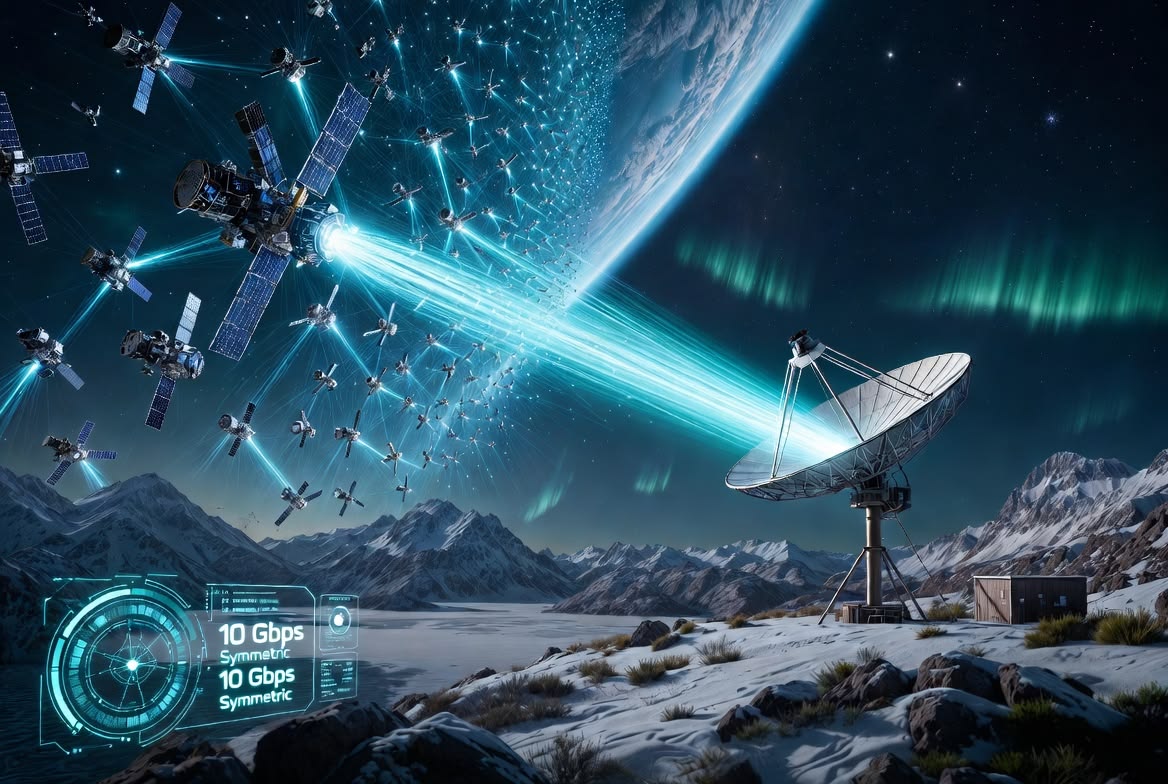
Space exploration may appear distant from ordinary life. Rockets, planetary probes, space telescopes and astronauts operate far beyond the places where most people live and work. Yet many services used every day depend on satellites, space research or technologies developed to solve the unusual challenges of operating beyond Earth.
Weather forecasts, smartphone navigation, emergency communications, crop monitoring and disaster warnings all rely partly on space-based infrastructure. Research conducted for space missions has also influenced healthcare, food safety, manufacturing, computing, environmental monitoring and consumer technology.
Not every modern invention commonly associated with space was created by a space agency, and the benefits of satellite operations should not always be confused with the benefits of exploration missions. Even so, the wider space programme has created an environment in which governments, universities and companies develop technologies that frequently find valuable uses on Earth.
Why Space Missions Produce Useful Technology
Space is an extremely demanding environment. Equipment must survive intense vibration during launch, extreme temperatures, radiation, limited electrical power and long periods without repair. Human missions create additional challenges involving food, water, air quality, medical care and waste management.
Engineers must therefore design systems that are compact, reliable, energy-efficient and capable of operating with limited resources. These same qualities are useful in hospitals, factories, homes, vehicles and remote communities.
NASA’s Technology Transfer Program makes agency-developed inventions available for commercial and public use. Its annual Spinoff publication has documented more than 2,000 examples of space-related technologies adapted for life on Earth since 1976.
Better Weather Forecasting
One of the clearest everyday benefits of space technology is weather forecasting.
Weather satellites observe clouds, temperatures, atmospheric moisture, ocean conditions and storm development across large areas. Geostationary satellites continuously watch the same region, while polar-orbiting satellites collect detailed observations from around the planet.
Meteorologists combine satellite measurements with radar, surface observations and computer models. This information supports routine forecasts as well as warnings for thunderstorms, hurricanes, floods, wildfires, extreme heat and other dangerous conditions. NOAA reports that polar-orbiting satellite observations provide a large share of the data used in modern weather models.
Forecasts influence ordinary decisions such as what to wear, when to travel and whether an outdoor activity should proceed. They also help farmers plan planting and harvesting, airlines adjust routes, energy companies anticipate demand and emergency services position equipment before severe weather arrives.
During an emergency, satellites can track rapidly changing clouds, smoke, rainfall and fire conditions. This helps officials identify affected areas and make better-informed decisions about warnings, evacuations and disaster response.
Navigation and Precise Timing
Satellite navigation systems allow people to determine their location and travel more efficiently. They support directions on smartphones, vehicle navigation, aircraft operations, shipping, surveying and emergency response.
The Global Positioning System, or GPS, works through a group of satellites carrying highly accurate clocks. A receiver calculates its location by comparing the arrival times of signals from several satellites.
Navigation is only part of the system’s value. Telecommunications networks, financial markets, banking systems and electrical grids use GPS signals for precise time synchronisation. Package delivery, construction, mining and supply-chain management also depend on accurate positioning or timing.
GPS-equipped mobile phones can help emergency services determine a caller’s approximate location. Satellite navigation also supports search-and-rescue teams operating at sea, in mountains and after natural disasters.
Communication Across Long Distances
Communication satellites carry information between locations that may be difficult to connect using ground-based infrastructure alone.
They support television broadcasts, telephone connections, internet access, maritime communications and services in remote areas. Satellite links can be particularly useful for ships, aircraft, rural communities and regions where cables or mobile towers are unavailable.
After an earthquake, hurricane or flood, terrestrial communications may be damaged. Portable satellite systems can help emergency workers coordinate operations while damaged networks are restored.
Satellites are not the only way modern communications function, and most local internet traffic travels through terrestrial networks. However, space-based systems provide coverage, resilience and global reach that ground infrastructure cannot always supply.
Monitoring Earth’s Environment
Some of the most important space missions look toward Earth rather than distant planets.
Earth-observation satellites measure changes in forests, oceans, glaciers, farmland, coastlines and cities. They can track drought, air pollution, sea-surface temperature, ice coverage, soil moisture and vegetation health.
Because satellites repeatedly observe large areas using consistent instruments, they allow researchers to compare environmental conditions over time. This supports climate research, conservation, water management and urban planning.
Satellite observations can also reveal changes that are difficult to measure entirely from the ground, such as widespread deforestation, ocean temperatures or the movement of smoke across national borders. ESA describes satellite data and related space applications as tools supporting environmental protection, healthcare, education and responses to climate-related challenges.
Improving Agriculture and Food Production
Farmers increasingly use satellite navigation and Earth-observation data to manage land more precisely.
GPS-guided equipment can follow accurate routes across fields. This may reduce unnecessary overlap when planting seeds or applying fertiliser. Satellite imagery can help identify differences in crop growth, moisture levels or plant stress across a farm.
Precision agriculture allows resources to be directed toward areas where they are most needed. According to GPS.gov, more accurate application of fertilisers, herbicides and pesticides can reduce costs, improve yields and limit unnecessary chemical use.
Satellite information also helps governments and humanitarian organisations assess drought, monitor harvests and identify areas at risk of food shortages.
Safer Food-Production Systems
Space exploration influenced food safety through the Apollo programme.
NASA and the Pillsbury Company needed a method that would prevent contaminated food from reaching astronauts. Testing only the finished product was inadequate because a small sample could not guarantee the safety of every meal.
The resulting approach focused on identifying possible hazards throughout production and controlling the stages at which contamination was most likely. This system became known as Hazard Analysis and Critical Control Point, or HACCP.
HACCP principles were later adopted widely in food manufacturing and regulation. The method is now used internationally to prevent biological, chemical and physical hazards before unsafe food reaches consumers.
Advances in Healthcare
Human spaceflight requires medical systems that can work far from a hospital. Astronauts must be monitored remotely, and equipment must often be smaller and easier to operate than conventional hospital machinery.
These requirements have contributed to developments in remote health monitoring, portable diagnostic equipment, image processing and medical sensors. Technologies originally created to transmit astronauts’ vital signs helped advance systems used for hospital and home monitoring.
Space-imaging research has also supported improvements in medical image analysis. Techniques developed to improve or interpret pictures from telescopes and spacecraft have been adapted for applications such as endoscopy, tissue analysis and diagnostic imaging.
Remote ultrasound procedures developed for spaceflight have helped demonstrate how medical images can be guided and transmitted over long distances. Similar approaches may support healthcare in rural areas, emergency settings and locations without immediate access to specialists.
NASA’s 2026 Spinoff publication also describes technology developed for astronaut health monitoring that evolved into an implantable monitor for people with heart failure.
These examples do not mean that space agencies independently invented modern medicine. Rather, specialised space research has contributed technologies and engineering solutions that were later developed into medical products.
Research in Microgravity
The International Space Station provides a research environment in which gravity has a greatly reduced effect on experiments.
This allows scientists to study how cells, fluids, flames, materials and biological systems behave differently in microgravity. Researchers can use these differences to investigate processes that may be difficult to isolate on Earth.
Space-based research has examined muscle loss, bone density, immune function, plant growth and changes in microorganisms. These studies help protect astronauts during long missions, but they may also improve understanding of conditions affecting people on Earth.
Commercial researchers have used the space station to study human heart tissue, cartilage and pharmaceutical crystals. Microgravity does not automatically produce a successful medicine, but it can provide an additional experimental environment for investigating biological structures and treatment candidates.
Cleaner Water and Air
A spacecraft must recycle and manage resources carefully because transporting large quantities of water and replacement equipment is expensive.
Technologies designed for life-support systems may filter contaminants, monitor air quality or recycle water. Adapted versions can support remote communities, disaster relief, industrial facilities and ordinary households.
NASA has also developed compact sensors for detecting particles and pollutants. One aerosol sensor created for early fire detection in space has potential applications in monitoring wildfire smoke, volcanic particles and other environmental hazards on Earth.
It is important to evaluate each commercial claim separately. A product should not be assumed to be effective merely because its marketing mentions space technology.
Digital Cameras and Image Sensors
Spacecraft require small, lightweight cameras that consume little power while producing useful images.
NASA-supported work on compact image sensors helped advance complementary metal-oxide semiconductor active-pixel sensor technology. Related sensor designs became important in digital cameras and helped make high-quality cameras small enough for smartphones and other portable devices.
NASA’s 2026 Spinoff publication identifies miniaturised, energy-efficient imaging technology developed for spacecraft as part of the technical foundation for modern digital imagery.
The camera inside a modern phone is the product of contributions from many companies and research programmes. Space research was an important influence, but it was not the only source of the technology.
Improved Materials and Manufacturing
Space missions encourage the development of materials that are lightweight, durable and resistant to extreme conditions.
Research has contributed to improved insulation, protective coatings, composites, lubricants, shock-absorbing systems and heat-resistant materials. These technologies may later be adapted for buildings, aircraft, protective equipment and industrial machinery.
For example, shock-absorption technology used during space-shuttle launches was later adapted to help protect buildings from earthquake movement. NASA-supported lightweight solar-cell research has also produced portable power systems for users on Earth.
Additive manufacturing, commonly called 3D printing, is another major research area. Space agencies are investigating how structures, tools and replacement parts could be manufactured far from Earth.
The same work can improve construction and manufacturing on the ground. NASA’s 2026 Spinoff edition describes companies applying technology developed for printing planetary habitats to building components and housing projects on Earth.
Robotics and Automation
Robots explore places that are too distant, dangerous or expensive for humans to reach directly. Planetary rovers must navigate difficult terrain, communicate across long distances and continue operating with limited human intervention.
Research into robotic mobility, sensors, machine vision and autonomous control has applications beyond space. Related systems can inspect hazardous infrastructure, assist with disaster response, monitor farms and automate industrial work.
NASA-supported technology for aerial vehicles has influenced agricultural drones, bridge inspection and systems designed to improve autonomous navigation.
Robotic research may also support assistive devices and surgical systems. However, technology developed for a spacecraft normally requires substantial testing and redesign before it becomes suitable for medical or consumer use.
Computing and Software
Spacecraft generate large volumes of data and must operate reliably with limited computing power. Scientists and engineers therefore develop efficient software for navigation, image processing, communication and fault detection.
NASA research helped demonstrate how groups of commercially available computers could be connected to create powerful, lower-cost computing systems. Similar cluster-based approaches became useful in scientific research, engineering and commercial design.
Software designed for space missions may later be used to analyse images, manage complex systems or detect technical failures. Space research also creates demanding test cases for artificial intelligence because spacecraft must interpret sensor data and sometimes make limited decisions without immediate instructions from Earth.
Search and Rescue
Satellites are a critical part of international search-and-rescue systems.
Emergency beacons carried by ships, aircraft and individuals can transmit distress signals that satellites help relay to rescue authorities. Location information allows search teams to narrow the affected area and respond more quickly.
Space-developed communication technology is also improving personal locator beacons and related emergency systems.
These services are especially valuable in oceans, deserts, mountains and other areas with little or no mobile-phone coverage.
Economic and Educational Benefits
Space programmes employ scientists, technicians, engineers, medical professionals, software developers and manufacturing specialists. They also purchase equipment and services from universities and private companies.
When technology is licensed or transferred, businesses may develop new products, create jobs and serve markets unrelated to the original mission. NASA states that its technology-transfer work has supported products across medicine, transportation, environmental management, public safety and industry.
Space missions also encourage education in science, technology, engineering and mathematics. The promise of exploring another world can motivate students to study subjects that later support healthcare, energy, construction, computing or environmental science.
The economic impact of a particular mission can be difficult to measure. Benefits may appear years later, and some technologies would possibly have been developed through other research. Claims about returns should therefore be based on evidence rather than assuming that every space expenditure produces an immediate commercial reward.
International Cooperation
Many space missions involve cooperation among countries, universities and scientific institutions.
The International Space Station is a prominent example of nations sharing equipment, research and operational responsibilities. Earth-observation programmes also exchange information that supports weather forecasting, environmental monitoring and disaster response across national borders.
Scientific cooperation does not eliminate political disagreement, but it can create common technical standards, long-term professional relationships and shared access to information.
Common Myths About Space Technology
Several familiar products are frequently described as NASA inventions even when the history is more complicated.
NASA did not invent hook-and-loop fasteners, commonly known by the brand name Velcro. It did not invent Teflon or the powdered drink Tang. These products existed before their well-known use in space programmes.
Memory foam, compact digital imaging technology and Apollo-related food-safety methods have stronger documented links to NASA research or mission requirements.
Accurate examples are more persuasive than exaggerated claims. Space exploration has produced many genuine benefits without needing every modern convenience to be described as a space invention.
The Costs and Challenges of Space Exploration
Space exploration requires significant public and private investment. Decisions about funding involve priorities such as healthcare, education, infrastructure, environmental protection and scientific research.
The space sector can also create environmental and safety concerns. Rocket launches produce emissions, failed missions create risks, and inactive satellites contribute to orbital debris. Increasing numbers of satellites can affect astronomical observations and make orbital management more difficult.
Access to space-based services is also unequal. A satellite may provide coverage, but people still need affordable devices, electricity, internet connections and technical skills to benefit from it.
Recognising these challenges does not cancel the value of space exploration. It means that programmes should be judged by their scientific, social and economic outcomes and managed responsibly.
The Future of Benefits From Space
Future lunar and Mars missions will require advances in power generation, energy storage, recycling, autonomous healthcare, robotics and construction.
Systems that allow astronauts to live with limited water, food and replacement materials may support communities facing shortages on Earth. Lunar construction research could improve 3D-printed buildings, while compact medical systems could extend care to remote locations.
More capable Earth-observation satellites may improve wildfire detection, crop monitoring, climate research and disaster preparation. Satellite navigation and communication may also become more precise and widely available.
The eventual benefits cannot always be predicted. Technology created for one mission may prove more useful in an entirely different industry. This is one reason research organisations maintain formal technology-transfer programmes rather than waiting for useful applications to appear accidentally.
Frequently Asked Questions
How does space exploration affect an ordinary person?
An ordinary person may use space-based services while checking the weather, following smartphone directions, making a digitally timed financial transaction, receiving a package or calling emergency services.
People may also use products or medical systems influenced by technologies originally developed for space missions.
Did NASA invent the internet?
No. The internet developed through research by several government agencies, universities and private organisations. Space agencies contributed to satellite communication and advanced computing, but NASA did not independently invent the internet.
Did NASA invent the smartphone camera?
NASA did not invent the complete smartphone camera. However, NASA-supported work on compact, low-power image sensors contributed to technologies that helped make small digital cameras practical. Modern smartphone cameras combine innovations from many researchers and manufacturers.
Are weather apps dependent on satellites?
Most modern weather forecasts use information from several sources, including satellites, radar, weather stations, aircraft, ocean buoys and computer models.
Satellite data is especially important because it provides broad and repeated observations of the atmosphere and oceans, including areas with few ground instruments.
Is GPS the same as the internet?
No. GPS satellites broadcast timing signals that allow a receiver to calculate its location. The receiver does not usually need an internet connection to determine its position.
Internet access may be needed to download maps, traffic information or business listings used by a navigation application.
Do satellites provide all internet services?
No. Most internet data travels through fibre-optic cables, mobile networks and other ground systems. Satellites are particularly valuable for remote coverage, mobile platforms and backup communications.
How does space research help medicine?
Space research has supported remote patient monitoring, portable diagnostics, medical image processing and studies of bones, muscles, cells and immune function.
A space experiment does not automatically lead to a treatment. Medical products must still undergo clinical testing and regulatory review.
Can space technology help during natural disasters?
Yes. Satellites can monitor storms, flooding, fires and damaged regions. Navigation systems help locate responders and supplies, while satellite communications can operate when local networks are unavailable.
Emergency managers use these tools alongside reports from people on the ground, radar, aircraft and other information sources.
Does space exploration help the environment?
Earth-observation missions provide data about climate, forests, oceans, ice, pollution and land use. This information can support environmental research and policy.
Space activity also has environmental costs, including launch emissions and orbital debris. Responsible exploration must consider both benefits and harms.
Are all NASA spinoff products invented entirely by NASA?
No. A spinoff may involve NASA funding, research, software, facilities, expertise or a technology licence. A private company may then perform additional development and create the commercial product.
The relationship can therefore range from direct adaptation of a NASA invention to a broader collaboration.
Is spending money on space exploration worthwhile?
The answer depends on the mission, its costs and the value placed on science, security, economic development and long-term technological progress.
Space programmes can produce practical benefits, but these benefits should be evaluated honestly. Not every mission leads to a commercial product, and public investment always involves choices among competing needs.
Conclusion
Space exploration benefits everyday life in ways that are both direct and indirect. Satellites guide journeys, support communications, improve forecasts and monitor the planet. Research for spacecraft has contributed to safer food, remote healthcare, digital imaging, efficient materials, robotics and environmental sensors.
The most important benefits are not always dramatic consumer inventions. They may be more accurate warnings before a storm, better information for a farmer, a faster search-and-rescue operation or a medical technology that reaches a distant patient.
Space exploration is not separate from life on Earth. It is a demanding form of research that forces people to solve problems involving energy, communication, health, materials and survival. When those solutions are transferred responsibly, knowledge developed beyond Earth can help address challenges much closer to home.