

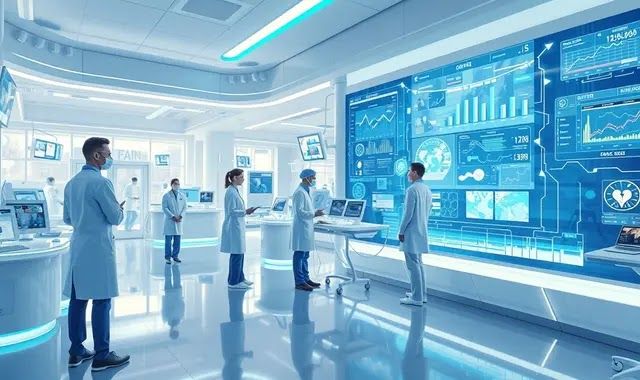
Medical technology has transformed healthcare from a practice based mainly on visible symptoms and physical examination into a sophisticated system capable of viewing internal organs, analysing genetic information, monitoring patients remotely and treating disease at the cellular level.
This progress did not occur through one invention. It developed through centuries of collaboration among doctors, nurses, scientists, engineers, computer specialists, manufacturers and patients. Each generation of technology has expanded what healthcare professionals can observe, measure, predict and treat.
Modern innovation, however, is not valuable simply because it is new. A healthcare technology must be safe, clinically effective, affordable, usable and accessible to the people who need it. The history of medical technology is therefore both a story of scientific progress and a continuing effort to ensure that progress improves real patient outcomes.
What Is Medical Technology?
Medical technology includes the tools, products, procedures and information systems used to prevent, diagnose, monitor or treat health conditions.
The term covers familiar equipment such as thermometers, laboratory analysers, X-ray machines, pacemakers and surgical instruments. It also includes vaccines, diagnostic tests, electronic health records, mobile health applications, wearable sensors, artificial intelligence systems and gene-based treatments.
Healthcare innovation is a broader concept. It may involve a new device, medicine or procedure, but it can also involve a better method of organising services, sharing medical information or delivering care to underserved communities.
The World Health Organization defines health technology broadly as the organised knowledge and skills applied through medicines, vaccines, devices, procedures and systems developed to solve health problems and improve quality of life.
Healthcare Before Modern Technology
Early healthcare depended heavily on observation. Practitioners examined a patient’s appearance, pulse, breathing, temperature, pain and behaviour. They could listen to symptoms and inspect visible injuries, but they had few reliable methods for seeing inside the body or identifying the biological causes of disease.
The development of instruments such as microscopes, thermometers and stethoscopes gradually made medicine more measurable. Laboratory science then allowed healthcare professionals to examine blood, urine, tissue and microorganisms.
This shift was fundamental. Disease could increasingly be investigated through physical evidence instead of symptoms alone. Medical care began moving toward the modern model of testing a hypothesis, collecting clinical data and selecting treatment according to evidence.
The Medical-Imaging Revolution
One of the most important changes in medicine began with the discovery of X-rays by Wilhelm Conrad Röntgen in 1895. For the first time, doctors could examine structures inside a living person without performing surgery.
Early X-rays were particularly useful for locating fractures and foreign objects. Over time, improvements in equipment, film and radiation control made radiography faster, clearer and safer.
Computed tomography, commonly known as CT, created another major change. The first clinical CT scan was performed in 1971. Instead of producing a single flat image, CT used X-ray measurements from multiple angles and computer processing to create cross-sectional images of the body.
Magnetic resonance imaging, or MRI, later made it possible to produce highly detailed images of many soft tissues without using ionising radiation. Ultrasound used sound waves to provide real-time images, while nuclear-medicine technologies revealed biological activity rather than anatomy alone.
Medical imaging is now used throughout healthcare, including screening, emergency diagnosis, treatment planning, image-guided procedures and monitoring a patient’s response to treatment. These benefits must still be balanced against possible radiation exposure, contrast reactions, incidental findings and unnecessary testing.
Laboratory Medicine and Faster Diagnosis
Laboratory technology changed medicine by allowing clinicians to investigate processes that could not be seen during an examination.
Modern laboratories can measure blood-cell counts, hormones, enzymes, antibodies, genetic material and hundreds of other biological markers. Automated analysers can process large numbers of samples with greater speed and consistency than manual techniques.
Molecular tests have made it possible to detect genetic material from infectious organisms. Pathology systems can analyse tissue samples to identify cancer and other diseases. Point-of-care tests can produce selected results in clinics, ambulances, pharmacies or patients’ homes rather than requiring every sample to be sent to a central laboratory.
Faster testing can support earlier treatment, but a test result must always be interpreted in context. A technically advanced test may still produce false-positive or false-negative results, and detecting an abnormality does not automatically prove that it is causing a person’s symptoms.
Safer Surgery and Advanced Monitoring
Surgical innovation has progressed alongside improvements in anaesthesia, infection prevention, blood transfusion, imaging and patient monitoring.
Traditional open surgery often requires a large incision to provide direct access to an organ. Minimally invasive surgery uses smaller openings, cameras and specialised instruments. For suitable procedures, this approach may reduce tissue damage and support shorter recovery, although it is not automatically the best option for every patient.
Computer-assisted and robotically assisted surgical systems extend these capabilities. They can provide magnified three-dimensional views and help surgeons control instruments in confined areas. Despite the popular term “robotic surgery,” currently authorised systems generally remain under direct human control and do not independently perform the operation.
Technology has also improved safety during and after surgery. Electronic monitors can continuously track heart rhythm, blood pressure, oxygen levels, breathing and temperature. Infusion pumps deliver controlled quantities of fluids and medicines, while imaging and navigation systems help clinicians plan and perform complex procedures.
The quality of the outcome still depends on correct patient selection, professional training, teamwork and the clinical evidence supporting the procedure.
Life-Supporting Medical Devices
Some medical technologies do more than assist diagnosis—they replace or support a vital body function.
Pacemakers can regulate certain abnormal heart rhythms. Dialysis equipment removes waste and excess fluid when the kidneys cannot perform these functions adequately. Ventilators support breathing, while implanted hearing devices may provide access to sound for selected patients with severe hearing loss.
Prosthetic limbs and assistive technologies have also become more sophisticated. Modern designs may use lightweight materials, digital sensors and computer-controlled components to support movement and independence.
These technologies demonstrate an important principle of healthcare innovation: the objective is not always to cure a disease. Technology can also preserve function, reduce disability and improve quality of life.
From Paper Charts to Electronic Health Records
For much of medical history, patient information was recorded on paper and stored within individual hospitals or clinics. This made it difficult for different providers to access a complete medical history.
Electronic health records, or EHRs, allow authorised professionals to access information such as diagnoses, medicines, allergies, laboratory results, clinical notes and imaging reports. They can improve coordination by bringing information from different stages of care into a more complete longitudinal record.
Digital records also support medication alerts, clinical decision tools, appointment systems, electronic prescribing and patient portals. In public health and research, large datasets can help specialists identify patterns, monitor diseases and evaluate treatment outcomes.
However, digitisation introduced new difficulties. Poorly designed systems may increase administrative work, generate excessive alerts or make essential information difficult to locate. Separate systems may also be unable to exchange data effectively.
Interoperability—the ability of digital systems to communicate and use shared information—is therefore a central goal of modern health information technology.
Telehealth and Remote Care
Communication technology has allowed parts of healthcare to move beyond hospitals and clinics.
Telehealth can connect patients with healthcare professionals through video, telephone or secure messaging. It may be useful for follow-up appointments, mental-health support, medication reviews, chronic-disease management and specialist consultations.
Remote patient monitoring adds another layer. Connected devices can collect information such as blood pressure, blood glucose, heart rate, weight or oxygen levels while a patient is at home. These measurements may give clinicians a broader view than a single reading collected during an appointment.
Remote monitoring can reduce travel and help identify important changes between visits, particularly for people managing long-term conditions or living far from specialist services. It does not eliminate the need for physical examinations, emergency care or in-person procedures.
Access also depends on reliable internet service, suitable equipment, digital literacy and privacy protections. Telehealth can reduce some inequalities while worsening others when these foundations are missing.
Wearable Health Technology
Wearable devices have brought health monitoring into everyday life. Smartwatches, patches, rings and specialised medical sensors can measure selected physiological signals during normal activities.
Consumer devices may track movement, sleep patterns or heart rate. Regulated medical wearables may be designed for more specific purposes, such as continuous glucose monitoring, heart-rhythm assessment or seizure monitoring.
The FDA notes that sensor-based digital health devices can collect real-time or occasional information outside clinical environments, including in the home.
Wearables can encourage patients to participate more actively in their care, but more data is not always better. Measurements may be inaccurate, incomplete or difficult to interpret. Frequent notifications can also create unnecessary anxiety.
A wearable reading should not be treated as a diagnosis unless the device is validated for that purpose and the result has been interpreted appropriately.
Genomics and Precision Medicine
The Human Genome Project produced a reference sequence of the human genome and helped establish the scientific foundations of modern genomics. The project’s finished sequence was announced in 2003 after an international research effort lasting more than a decade.
Sequencing technology has since become dramatically faster and less expensive. The first reference genome required hundreds of millions of dollars in sequencing work, whereas later technologies made it possible to analyse individual genomes on a much larger scale. Precise comparisons remain difficult because sequencing cost depends on coverage, accuracy, analysis and what services are included.
Genomic information can help diagnose certain inherited disorders, classify some cancers and identify treatments that are more likely to work for a particular biological profile. Pharmacogenomics examines how genetic differences may influence a person’s response to medicines.
This approach is often described as precision medicine. It does not mean that every treatment is individually designed from the beginning. Instead, it uses biological and clinical information to place patients into more accurately defined groups and guide care.
Genetic information is also sensitive. Testing can reveal findings that affect biological relatives, and some results have uncertain significance. Patients therefore need informed consent, privacy protection and access to appropriate counselling.
Gene Therapy and Genome Editing
Traditional medicines often treat the consequences of a disease. Gene therapy attempts to address disease by adding, replacing, silencing or editing genetic material.
In December 2023, the FDA approved the first treatment using CRISPR/Cas9 genome-editing technology. The treatment modifies a patient’s own blood-forming stem cells and is used for certain patients with sickle cell disease.
This milestone showed that genome editing had moved from laboratory research into regulated clinical treatment. It did not mean that CRISPR had become a simple or universally available cure.
Current gene therapies can involve complex manufacturing, specialised centres, intensive preparation and significant risks. They may also be extremely expensive. Long-term monitoring is important because some effects may not become clear immediately.
The future of gene therapy will depend not only on scientific capability but also on safety, affordability, ethical governance and equitable access.
Three-Dimensional Printing in Medicine
Three-dimensional printing creates objects layer by layer from digital designs. In healthcare, it can produce anatomical models, surgical guides, prosthetic components and selected implants.
One major advantage is the ability to create devices that match a patient’s anatomy using medical-imaging data. Patient-specific models may also help surgical teams understand complex anatomy and plan procedures.
Commercially available 3D-printed medical products include surgical instruments, implants and external prostheses. Researchers are investigating the printing of living tissues and organs, but functional printed organs suitable for routine transplantation remain at an early experimental stage.
The technology therefore has important current applications, but claims about fully printed replacement hearts, kidneys or livers should not be confused with established clinical practice.
Artificial Intelligence in Healthcare
Artificial intelligence is one of the most rapidly developing areas of medical innovation.
AI systems can analyse large quantities of images, signals, laboratory results or clinical data. Possible uses include detecting patterns in medical scans, estimating disease risk, supporting diagnosis, monitoring patients, assisting treatment planning and improving administrative workflows.
The FDA maintains a regularly updated list of AI-enabled medical devices authorised for marketing in the United States. Many current applications involve medical imaging, although AI-enabled technologies also appear in cardiovascular care, neurology, pathology and other specialties.
Generative AI and large multimodal models may eventually work with combinations of text, images, audio and other health information. Potential applications include documentation, patient communication, research and clinical decision support.
These systems can also produce incorrect or fabricated information. Performance may decline when an AI tool is used with populations, equipment or clinical settings that differ from its development data.
WHO guidance therefore emphasises that AI in health should be governed according to safety, transparency, accountability, privacy, human rights and equitable access.
AI should support qualified healthcare professionals rather than create the false impression that human judgement, informed consent and responsibility are no longer necessary.
Virtual and Augmented Reality
Virtual reality creates a computer-generated environment, while augmented reality places digital information over a view of the real world.
In healthcare, these technologies may be used for professional training, surgical planning, rehabilitation, pain management and selected mental-health treatments. A surgeon might use an augmented display to view anatomical information during planning, while a rehabilitation patient might complete controlled exercises in a virtual environment.
The FDA has authorised medical devices incorporating augmented- and virtual-reality functions, but each product has a particular intended use. A general-purpose headset or wellness application should not automatically be considered a clinically proven treatment.
The Growth of Digital Health Systems
Digital health is no longer limited to individual applications. Countries are building national systems that connect health records, laboratories, pharmacies, public-health agencies and patient services.
In May 2025, the World Health Assembly extended WHO’s Global Strategy on Digital Health through 2027 and approved the development of a further strategy for 2028–2033. WHO reported that 129 countries had established national digital-health strategies.
The purpose of this transformation is not simply to install more software. Effective digital health requires governance, infrastructure, trained workers, reliable data, interoperability and services designed around patient needs.
A poorly connected system may digitise existing inefficiencies. A successful system should make care safer, more coordinated and more accessible.
Cybersecurity and Medical Technology
As medical devices and health systems become more connected, cybersecurity becomes a patient-safety issue.
A security weakness could expose private health information, interrupt hospital operations or interfere with a connected medical device. Manufacturers and healthcare organisations therefore need security measures throughout a product’s lifecycle, including design, software updates and vulnerability management.
The FDA issued updated final guidance on cybersecurity in medical devices in June 2025, reflecting the need to address cyber risks during premarket development as well as after products are released.
Patients also have a role. Medical accounts should use strong authentication, software should be updated appropriately and sensitive health information should be shared only through trusted systems.
Why Newer Does Not Always Mean Better
Innovation is often described as automatically beneficial, but an impressive technology may provide little clinical value if it does not improve meaningful outcomes.
A new device might produce more detailed measurements without changing treatment. A robotic procedure might be more expensive without offering an important advantage for a particular operation. An AI system might perform well in a laboratory but fail in routine clinical practice.
Health technology assessment examines clinical effectiveness, cost, ethical considerations, organisational effects and social consequences. It helps policymakers decide whether a technology should be adopted or funded within a health system.
The correct question is not simply, “Is this technology advanced?” It is, “Does this technology provide enough benefit, for the right patients, at an acceptable level of risk and cost?”
Inequality in Access to Innovation
The benefits of medical technology are distributed unevenly.
Advanced treatments may be available only in wealthy countries, major cities or specialised hospitals. Rural communities may lack reliable internet connectivity, diagnostic equipment or trained personnel. Even when a technology exists, its cost may place it beyond the reach of many patients.
Design can create further barriers when devices do not account for disability, language, cultural differences or variation among patient populations.
WHO has emphasised that promoting medical innovation must be combined with ensuring equitable access to essential medicines, vaccines and medical devices.
A technology that works scientifically but cannot reach the population that needs it has not fully achieved its healthcare purpose.
The Future of Medical Technology
Future healthcare will probably become more predictive, connected and personalised.
Sensors may identify changes before symptoms become severe. Imaging, laboratory and genomic data may be combined to produce more precise risk assessments. AI may reduce repetitive administrative work and assist professionals in interpreting complex information. Regenerative medicine may improve the repair or replacement of damaged tissues.
Care may also move further into homes and communities. Portable imaging, remote monitoring and point-of-care diagnostics could allow more conditions to be managed outside major hospitals.
These changes will not remove uncertainty from medicine. Biological systems are complex, patients have different priorities and every technology has limitations.
The most successful future systems will combine technical capability with professional expertise, compassionate communication and strong public safeguards.
Frequently Asked Questions
What is the most important medical invention?
There is no single correct answer. Vaccination, sanitation, antibiotics, anaesthesia, medical imaging, laboratory testing and modern surgical techniques have all had enormous effects.
Their benefits are also interconnected. A complex operation, for example, depends on anaesthesia, infection control, imaging, monitoring, laboratory services and trained professionals working together.
Is artificial intelligence replacing doctors?
AI is changing some medical tasks, but it is not replacing the full role of a doctor or other healthcare professional.
Clinical care requires examination, communication, ethical judgement, responsibility and an understanding of the patient’s preferences and circumstances. AI may assist with particular tasks, but its outputs must be assessed for accuracy and relevance.
Are robotic systems able to perform surgery independently?
Most robotically assisted surgical systems currently used in clinical care are directly controlled by trained surgeons. The system translates the surgeon’s movements into movements of specialised instruments.
The technology may support precision or minimally invasive access, but it does not guarantee a better outcome for every procedure.
How has technology improved medical diagnosis?
Technology allows clinicians to examine anatomy, measure biological processes and identify disease-related patterns that cannot be detected through observation alone.
Imaging can reveal internal structures, laboratory tests can measure biomarkers, molecular tests can detect pathogens and genomic analysis can identify certain inherited changes.
Diagnosis still requires clinical interpretation because an abnormal test result does not always equal disease.
What is precision medicine?
Precision medicine uses information about a patient’s biology, health history, environment and lifestyle to guide prevention or treatment more accurately.
In practice, this may involve selecting a cancer medicine according to a tumour marker or adjusting a medicine based on genetic information. It does not mean that every patient receives a completely unique treatment.
Can wearable devices diagnose disease?
Some regulated wearable medical devices are authorised for specific diagnostic or monitoring functions. Many consumer wearables, however, are designed primarily for wellness or general tracking.
A notification from a wearable should not automatically be treated as a confirmed diagnosis. Concerning results should be discussed with an appropriate healthcare professional.
Is telehealth as effective as an in-person appointment?
Telehealth can be effective for selected services, especially follow-up care, counselling, medication reviews and remote monitoring.
It is not suitable for every situation. A physical examination, imaging study, laboratory test, procedure or emergency assessment may require in-person care.
Are electronic health records completely secure?
No digital system can be guaranteed completely secure. EHRs can improve availability and coordination of information, but they must be protected against unauthorised access, technical failure and cyberattacks.
Security depends on technical safeguards, staff training, responsible data handling and continued monitoring.
Will gene editing cure all inherited diseases?
No. Genetic diseases differ greatly, and many are affected by multiple genes or environmental factors.
Gene editing has produced major clinical advances for selected conditions, but treatment can be complex and risky. Each therapy must be evaluated separately through clinical research and regulatory review.
Can scientists print replacement human organs?
Researchers are studying bioprinting and tissue engineering, but fully functional 3D-printed organs are not currently available for routine transplantation.
Existing clinical applications focus more commonly on anatomical models, surgical guides, prostheses and selected implants.
What makes a healthcare innovation successful?
A successful innovation solves a meaningful health problem and produces better outcomes than available alternatives. It should also be safe, reliable, usable, affordable and appropriate for the healthcare setting in which it will operate.
Scientific novelty alone is not enough.
Conclusion
The evolution of medical technology has changed every stage of healthcare. Imaging allows doctors to see inside the body, laboratory systems reveal biological processes, digital records connect information, remote devices extend care into the home and genomic technologies make increasingly precise treatment possible.
Artificial intelligence, gene editing, robotics and regenerative medicine may drive the next phase of progress. Their value will depend on how responsibly they are developed and used.
Healthcare innovation should not be judged by how futuristic it appears. Its true measure is whether it helps people live longer, healthier and more independent lives while protecting safety, dignity, privacy and fairness.
The future of medicine will be shaped by technology, but it must remain centred on human needs.
This article provides general educational information and is not a substitute for personalised medical advice, diagnosis or treatment.