

Vaccines are among the most important tools used to prevent infectious disease. They prepare the immune system to recognize a specific virus, bacterium or toxin before a person encounters the full danger of the disease.
Vaccination does not create an artificial replacement for the immune system. Instead, it works with the body’s natural defenses, allowing immune cells to practise recognizing a threat and develop a faster response for the future. The World Health Organization estimates that immunization prevents approximately 3.5 million to 5 million deaths each year from diseases including measles, influenza, tetanus, diphtheria and pertussis.
What Is a Vaccine?
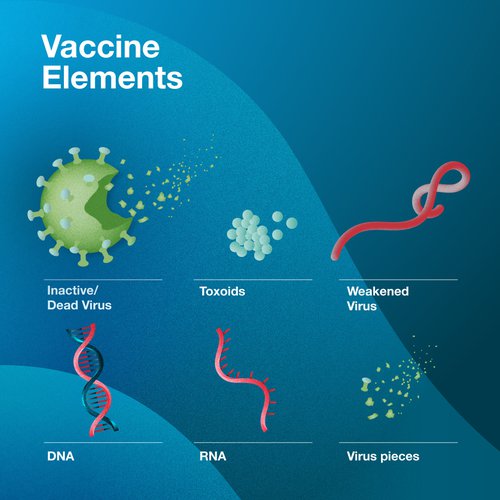
A vaccine is a biological preparation designed to produce protection against a particular infectious disease. It may contain a weakened or inactive form of a microorganism, a selected piece of it, a harmless version of a toxin it produces, or genetic instructions that allow the body to make a temporary antigen.
An antigen is a substance that the immune system recognizes as unfamiliar. When immune cells encounter the vaccine antigen, they begin developing a targeted response. This response prepares the body for a later encounter with the actual disease-causing organism.
Vaccination is the act of receiving a vaccine. Immunization is the broader process through which a person develops protection. A person may need more than one vaccine dose before becoming adequately immunized.
How the Immune System Responds to Infection
When a harmful microorganism enters the body for the first time, the immune system must identify it, activate appropriate immune cells and produce a targeted response. This process takes time, during which the microorganism may multiply and cause illness.
B cells can produce proteins called antibodies that bind to particular antigens. Antibodies may block a pathogen from entering cells, neutralize toxins or mark the pathogen so that other immune cells can destroy it.
T cells also play important roles. Some help coordinate the immune response, while others recognize and destroy infected cells. After an infection has been controlled, parts of the adaptive immune system may remain as memory B cells, memory T cells and long-lived antibody-producing cells.
If the same pathogen appears again, these memory cells can usually respond more quickly and effectively.
How Vaccines Train the Immune System
A vaccine provides the immune system with a safe preview of a pathogen or one of its important antigens. The immune system responds by activating cells, producing antibodies and creating immune memory without requiring the person to experience the uncontrolled natural infection.
After vaccination, the immune system does not maintain its full immediate response forever. Most activated immune cells disappear once the initial response is complete. However, selected memory cells remain ready to recognize the antigen in the future.
When the vaccinated person later encounters the pathogen, these memory cells can activate rapidly. The resulting response may prevent infection completely, reduce the amount of pathogen in the body or significantly lower the risk of severe disease and complications.
The Main Types of Vaccines
Vaccines use different technologies because pathogens behave differently and because no single vaccine design is suitable for every disease.
Live Attenuated Vaccines
Live attenuated vaccines contain a weakened version of a virus or bacterium. The weakened organism can reproduce to a limited extent, producing an immune response that resembles the response to natural infection without usually causing the disease itself.
These vaccines can create strong and long-lasting protection. However, certain live vaccines may not be suitable for people with severely weakened immune systems or in other specific medical circumstances. Examples include some measles, mumps, rubella and chickenpox vaccines.
Inactivated Vaccines
Inactivated vaccines contain microorganisms that have been killed so that they cannot reproduce. They still contain antigens that the immune system can recognize.
Because the organism cannot multiply, these vaccines often require several doses or later boosters to build and maintain strong protection. Examples include certain polio, hepatitis A and rabies vaccines.
Subunit and Recombinant Vaccines
Subunit vaccines use selected proteins, sugars or other pieces of a pathogen rather than the entire microorganism. The chosen component is sufficient to teach the immune system what it needs to recognize.
Recombinant technology can be used to produce these antigens without growing large quantities of the original pathogen. Hepatitis B and human papillomavirus vaccines are important examples.
Conjugate Vaccines
Some bacteria have outer sugar coatings that are difficult for a young child’s immune system to recognize effectively. Conjugate vaccines attach these sugars to a protein that creates a stronger immune response.
This approach is used in vaccines against diseases caused by organisms such as Haemophilus influenzae type b and certain pneumococcal bacteria.
Toxoid Vaccines
Some bacteria cause illness mainly by releasing toxins. Toxoid vaccines contain versions of these toxins that have been made harmless.
The immune system learns to recognize and neutralize the toxin rather than attacking the bacterium directly. Tetanus and diphtheria vaccines use this approach.
Viral-Vector Vaccines
Viral-vector vaccines use a modified, harmless carrier virus to deliver genetic instructions for an antigen. The vaccinated person’s cells temporarily produce the antigen, allowing the immune system to recognize it and develop protection.
The carrier is engineered for vaccine use and does not behave like the disease-causing pathogen the vaccine is designed to prevent.
mRNA Vaccines
Messenger RNA vaccines contain temporary genetic instructions that tell cells to produce a selected antigen. The immune system detects the antigen and begins creating antibodies and immune memory.
The mRNA serves only as a short-lived set of instructions. It is broken down after it has delivered its message. This technology allows scientists to design vaccines without including the complete disease-causing virus.
Why Are Multiple Doses Sometimes Necessary?
The first vaccine dose often introduces the antigen and primes the immune system. Additional doses may strengthen the response, improve the quality of the antibodies and increase the number of memory cells.
Some vaccines create long-lasting protection after a relatively small number of doses. Protection from others decreases gradually and must be renewed with a booster. A booster reminds the immune system of the antigen and increases its readiness to respond.
Vaccines may also be updated when a virus changes significantly over time. The need for an updated vaccine does not mean that an earlier dose failed. It may mean that immune protection has decreased or that the circulating pathogen has changed.
What Is Inside a Vaccine?
Every vaccine contains an active component responsible for teaching the immune system. This may be an antigen or genetic instructions for producing one.
Some vaccines also include an adjuvant. An adjuvant strengthens the immune response, allowing the vaccine to provide useful protection with a smaller quantity of antigen or fewer doses.
Stabilizers help vaccine components remain effective during manufacturing, storage and transportation. Preservatives may be added to certain multidose containers to prevent contamination after the vial has been opened.
Small residual amounts of substances used during manufacturing may also remain in a final product. Vaccine ingredients and manufacturing processes are evaluated for safety, quality, purity and consistency.
An ingredient’s name alone does not determine whether it is harmful. Safety depends on its chemical form, quantity, method of exposure and how the body processes it.
How Vaccine Safety Is Tested
Vaccine development begins with laboratory research. Scientists study the pathogen, identify useful antigens and test whether a proposed vaccine can produce an appropriate immune response.
Promising candidates move into preclinical testing before being studied in people. Human clinical development generally progresses through several phases.
Early studies focus mainly on immediate safety and dosage. Later studies include hundreds and then thousands of participants, providing information about immune responses, effectiveness, common reactions and less common safety concerns.
Regulatory authorities assess the clinical evidence as well as the vaccine’s manufacturing process, purity, potency and consistency before deciding whether it should be approved.
Safety Monitoring Continues After Approval
Clinical trials cannot detect every extremely rare event because even a large trial includes only a limited number of participants. Monitoring therefore continues after a vaccine is introduced to a much larger population.
In the United States, the CDC and FDA use several complementary surveillance systems. The Vaccine Adverse Event Reporting System, or VAERS, accepts reports of medical events occurring after vaccination. A report does not establish that the vaccine caused the event; it provides a possible safety signal that may require further investigation.
The Vaccine Safety Datalink uses electronic health records from participating healthcare organizations to study possible risks and monitor selected events in near real time. Researchers can compare rates between groups to determine whether an event occurs more frequently than expected.
Other countries use their own regulatory and vaccine-safety monitoring systems.
Common Reactions After Vaccination
Vaccines activate the immune system, so temporary reactions can occur. Common effects include soreness or swelling at the injection site, tiredness, a mild fever, headache or muscle discomfort.
These effects generally begin soon after vaccination and resolve without lasting harm. Not experiencing a noticeable reaction does not mean that the vaccine failed; people’s immune responses differ.
Serious reactions can occur, as they can with any medical product, but they are uncommon. Anyone who experiences difficulty breathing, severe swelling, fainting or other signs of a serious allergic reaction requires urgent medical attention.
Vaccine Effectiveness Is Not All or Nothing
No vaccine provides perfect protection to every person. Age, health conditions, medications, the type of vaccine, the pathogen and the time since vaccination can all affect the immune response.
A vaccinated person may sometimes become infected. This is called a breakthrough infection. However, a vaccine may still provide important protection by reducing the risk of severe disease, hospitalization, long-term complications or death.
Vaccine efficacy describes how well a vaccine performs under controlled clinical-trial conditions. Vaccine effectiveness describes how well it performs in real populations, where people have different ages, health conditions and exposure levels.
Vaccines and Community Protection
Vaccination can benefit both the vaccinated person and the wider community. When many people are protected, a pathogen has fewer opportunities to move from one susceptible person to another.
Reduced transmission can indirectly protect people who cannot receive a particular vaccine or who develop a weaker immune response because of age, illness or medical treatment.
The percentage of people who must be immune to limit transmission is not the same for every disease. It depends on factors such as how easily the pathogen spreads, how effective the vaccine is and how people interact. Community protection is therefore not a fixed guarantee, and it does not completely remove the risk for vulnerable individuals.
Vaccination Schedules
Vaccination schedules are designed around the ages at which people are most vulnerable to particular infections, when their immune systems can respond effectively and when additional doses are needed to maintain protection.
Vaccines are not only for children. Teenagers, adults, pregnant people, older adults, healthcare workers, international travellers and people with specific medical conditions may need additional vaccines.
Schedules differ among countries because disease patterns, available vaccines and public-health policies differ. Recommendations may also change as scientific evidence develops. People should follow their country’s current schedule and discuss individual circumstances with a qualified healthcare professional.
Frequently Asked Questions
Can a vaccine give someone the disease it is designed to prevent?
Most vaccines cannot cause the disease they prevent because they contain an inactive organism, only selected components or genetic instructions rather than a complete disease-causing pathogen.
Live attenuated vaccines contain weakened organisms and require additional precautions for certain people with weakened immune systems. A healthcare professional should review whether a live vaccine is appropriate in these circumstances.
Why do some people feel unwell after vaccination?
Temporary soreness, fever or tiredness can result from immune activation and inflammation. These effects are usually much milder and shorter than the disease and its possible complications.
Side effects are not required for protection. A person may develop a useful immune response without feeling noticeably different.
Can someone still catch a disease after being vaccinated?
Yes. No vaccine is completely effective in every person, and protection may take time to develop. Immunity may also decrease, or the pathogen may change.
Even when a vaccine does not completely prevent infection, it may make serious illness substantially less likely.
Is natural infection better than vaccination?
Natural infection can create immune memory, but it requires the person to experience the disease and accept its unpredictable risks. These may include hospitalization, disability, long-term complications or death.
Vaccination is designed to develop protection without requiring the person to face the full dangers of the natural disease.
Do multiple vaccines overwhelm the immune system?
Evidence does not show that receiving recommended vaccines together overwhelms or weakens a healthy person’s immune system. The immune system encounters and responds to numerous unfamiliar substances through breathing, eating, touching objects and ordinary daily activities.
Giving compatible vaccines at the same appointment can provide earlier protection and reduce the risk of missed doses.
Do vaccines cause autism?
No causal link has been found between vaccines and autism. In December 2025, the World Health Organization reported that an updated review covering studies published between 2010 and 2025 continued to support the conclusion that vaccines do not cause autism spectrum disorders.
Why are vaccine ingredients difficult to pronounce?
Scientific ingredient names often sound unfamiliar, but unfamiliarity does not indicate danger. Ingredients are selected for particular purposes, such as creating immunity, strengthening the response, preventing contamination or maintaining stability.
Their safety is evaluated according to the quantities and forms used in the finished vaccine.
What happens when a vaccine dose is missed?
A missed dose does not necessarily mean that the entire series must be restarted. Catch-up recommendations usually explain which dose should be given next and how doses should be spaced.
Because schedules vary, the person’s vaccination record should be reviewed by a healthcare professional or local vaccination service.
Are vaccines necessary when a disease has become rare?
A disease may be rare precisely because vaccination has limited its circulation. If vaccination rates decline while the pathogen still exists somewhere in the world, imported cases can lead to new outbreaks among susceptible people.
Continued vaccination may therefore be necessary to preserve the protection that made the disease uncommon.
Should everyone receive every vaccine?
No. Vaccine recommendations depend on age, medical history, pregnancy, occupation, travel, previous doses and exposure risk.
Certain vaccines may be delayed or avoided when a person has had a severe allergic reaction to a component or has a medical condition that changes the risks. Individual decisions should be made with a qualified healthcare professional.
Conclusion
Vaccines work by teaching the immune system to recognize a specific threat before the body encounters the full disease. They may use a weakened or inactive organism, selected antigens, harmless toxins or genetic instructions, but their central purpose is the same: to create targeted immune memory.
Vaccines are extensively studied before approval and continuously monitored afterward. They may not prevent every infection, but they can substantially reduce disease, serious complications and death.
Understanding how vaccines work makes it easier to separate genuine medical questions from misinformation. The safest vaccination plan is one based on current local recommendations, individual health needs and an informed discussion with a qualified healthcare professional.
This article provides general educational information and is not a substitute for personalized medical advice, diagnosis or treatment.