
The modern kitchen is no longer designed only as a place to prepare meals. It has become a multifunctional part of the home where people cook, eat, work, socialize, and spend time together. As a result, today’s kitchen designs increasingly combine practical layouts with comfortable materials, smart storage, attractive lighting, and personalized details.
In 2026, kitchen design is moving toward warmer colors, natural materials, concealed storage, multifunctional spaces, and more character. Industry research and designer surveys point to natural wood, neutral and earthy colors, better lighting, smarter storage, and flexible kitchen zones as important design directions.
Whether you are planning a complete kitchen renovation or simply looking for ideas to update your existing space, these modern kitchen design trends can provide useful inspiration.
1. Warm and Natural Kitchen Colors
One of the biggest changes in modern kitchen design is the move away from extremely cool and stark interiors.
Warm whites, taupe, mushroom, beige, soft brown, muted green, and other earthy shades are becoming increasingly popular. These colors can create a more welcoming atmosphere while still maintaining a contemporary appearance.
Instead of making every cabinet, wall, and surface the same color, consider using a warm neutral as the foundation and introducing a contrasting island, backsplash, or decorative feature.
2. Natural Wood Cabinetry
Natural wood is making a strong return in modern kitchens. Designers are increasingly using visible wood grain to introduce warmth and texture.
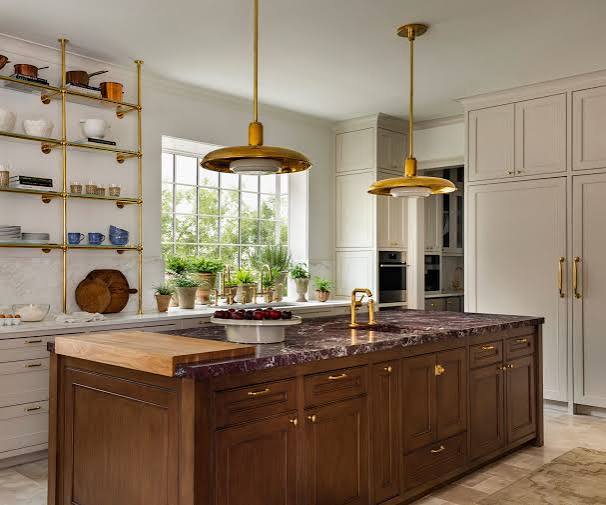
Oak and walnut can work particularly well in contemporary spaces. Wood cabinetry can also be combined with painted cabinets to create a two-tone design that feels modern without becoming overly uniform. The 2026 NKBA trends report found growing interest in wood-grain cabinetry, with white oak particularly prominent.
Natural wood is especially useful when you want a kitchen to feel modern but not cold.
3. Two-Tone Kitchen Cabinets
Using one cabinet color throughout the kitchen is no longer the only approach to modern design.
Two-tone cabinetry can combine light upper cabinets with darker lower cabinets, or natural wood with painted finishes. Another option is to use a contrasting color on the island while keeping the surrounding cabinets neutral.
This technique adds depth and visual interest without requiring complicated decoration.
4. Concealed Appliances and Hidden Storage
Modern kitchens are increasingly designed to hide appliances and everyday clutter.
Integrated refrigerators, panel-faced dishwashers, appliance garages, pull-out storage, and concealed coffee or breakfast stations can create a cleaner appearance. Secondary preparation areas such as pantries and sculleries are also gaining attention because they allow messy cooking activities and appliances to stay out of sight.
This trend can be particularly useful in open-plan homes where the kitchen is visible from the living or dining area.
5. Smarter Kitchen Storage
Good storage is one of the most important features of a functional kitchen.
Floor-to-ceiling cabinets, deep drawers, pull-out pantries, corner storage, interior cabinet organizers, and dedicated spaces for small appliances can make everyday cooking easier.
The 2026 NKBA report highlights increased interest in smarter storage, including taller cabinetry, more drawers, walk-in and butler pantries, and storage-focused islands.
Rather than simply adding more cabinets, think about how each cabinet will actually be used.
6. Multifunctional Kitchen Islands
Kitchen islands continue to be an important design feature, but their purpose is expanding.
A modern island can provide food preparation space, seating, storage, cooking facilities, charging points, and a place for family members to work or socialize. Industry trend research also shows strong interest in islands with integrated storage and lifestyle-oriented features.
However, bigger is not always better. An oversized island can interfere with movement and make cleaning more difficult. The island should be proportional to the room and leave comfortable circulation around it.
7. Statement Kitchen Lighting
Lighting has become an important decorative feature rather than simply a functional necessity.
Large pendant lights over an island, sculptural fixtures, integrated cabinet lighting, under-cabinet lights, and carefully positioned task lighting can transform the atmosphere of a kitchen.
The NKBA’s 2026 report identifies statement lighting, natural lighting, quality lighting, and task lighting as major considerations for kitchen design.
A well-designed lighting scheme should provide enough illumination for cooking while also creating a comfortable atmosphere when the kitchen is being used socially.
8. Integrated and Under-Cabinet Lighting
Hidden lighting can be particularly effective in modern kitchens.
Under-cabinet lights can illuminate countertops and reduce shadows, while interior cabinet lighting can make storage easier to access. Toe-kick lighting can provide subtle illumination near the floor and create an attractive evening effect.
Integrated lighting is also useful because it provides illumination without adding visual clutter to the room.
9. Natural Stone and Expressive Surfaces
Natural stone is being used not only for practical reasons but also as a design feature.
Quartzite, marble, and other stone surfaces with natural veining can create a strong visual focal point. Current kitchen trends also show interest in stone with more movement, texture, and individuality rather than completely uniform surfaces.
If natural stone is outside your budget, engineered surfaces can provide alternative finishes with different maintenance and price characteristics.
10. Large and Continuous Backsplashes
Instead of using small tiles across the entire backsplash, some modern kitchens are using larger slabs or continuous surfaces.
A large backsplash can create a cleaner appearance because there are fewer grout lines. It can also allow the natural pattern of stone or another surface to become part of the kitchen’s overall design.
The NKBA’s 2026 findings identify slab or solid-surface backsplashes as a growing design choice.
11. Earthy Green and Blue Accents
Modern kitchens do not have to be entirely neutral.
Muted greens, soft blues, deep greens, and other nature-inspired shades can introduce personality while remaining relatively timeless. Current kitchen research places greens and blues behind neutrals in popularity, while designers are also highlighting nature-inspired palettes.
You can introduce color through an island, lower cabinets, backsplash, walls, or accessories rather than committing the entire kitchen to a strong color.
12. Mixed Materials
Combining several materials can give a modern kitchen more depth.
For example, natural wood cabinets can be paired with stone countertops, brushed metal hardware, textured walls, and glass lighting. The goal is to create contrast while maintaining a consistent color palette.
Mixed materials can prevent a minimalist kitchen from looking flat or overly sterile.
13. Mixed Metal Finishes
Using exactly the same metal finish everywhere is no longer the only way to create a coordinated kitchen.
Brass, bronze, stainless steel, and matte black can sometimes be combined successfully when the overall design is carefully balanced. Mixed metals can add subtle contrast to handles, faucets, lighting, and decorative features.
The key is to repeat each finish intentionally rather than using too many unrelated materials.
14. Minimalist Cabinet Designs
Clean cabinet doors remain popular in contemporary kitchens.
Flat-panel and slab cabinet styles can create a simple appearance, particularly when paired with discreet hardware or handleless designs. The 2026 NKBA report identifies flat slab cabinet doors as a popular direction alongside panel-faced appliances.
Minimalist cabinetry works especially well when paired with natural textures and warm colors, helping prevent the kitchen from feeling too cold.
15. Kitchen Zoning
Instead of designing the kitchen as one large workspace, homeowners are increasingly creating different zones for different activities.
A preparation zone might contain knives, cutting boards, and ingredients. A coffee station can hold a coffee machine and cups. A baking area can include dedicated storage for mixers, flour, and baking equipment.
Kitchen zoning can improve organization and allow multiple people to use the space simultaneously. Current design discussions increasingly emphasize flexible zones that support cooking, entertaining, working, and other activities.
16. Butler Pantries and Prep Areas
A butler pantry or secondary preparation space can be particularly useful in larger homes.
It can provide additional storage and allow appliances, food preparation, and cleanup to take place away from the main kitchen. This helps keep the primary kitchen visually calm when guests are present.
For smaller homes, a full pantry room may not be practical, but a tall cabinet or concealed appliance station can provide some of the same benefits.
17. Smart Kitchen Technology
Technology continues to find its way into modern kitchens.
Smart refrigerators, connected appliances, automated lighting, wireless charging, and other technologies can provide convenience. However, technology should be selected according to actual needs rather than added simply because it is fashionable.
A simple smart lighting system or appliance with genuinely useful features may provide more practical value than a kitchen filled with technology that rarely gets used.
18. Sustainable Kitchen Materials
Sustainability is becoming increasingly relevant to kitchen design.
Homeowners can consider durable materials, responsibly sourced wood, long-lasting surfaces, energy-efficient appliances, efficient lighting, and designs that are intended to remain useful for many years.
Choosing durable materials can also reduce the need for frequent replacement, which can make a kitchen more sustainable over its lifetime.
19. Comfortable and Social Kitchens
Modern kitchens are increasingly designed around the way people actually live.
Comfortable seating, eat-in areas, beverage stations, and flexible spaces can make the kitchen useful beyond cooking. The NKBA’s 2026 research identifies eat-in kitchens and dedicated beverage areas among notable lifestyle-focused features.
If your kitchen is also a place for homework, conversations, entertaining, or remote work, the design should accommodate these activities without compromising the cooking area.
20. Warm Minimalism
Minimalism is evolving rather than disappearing.
Instead of completely white surfaces, empty counters, and a highly sterile appearance, warm minimalism combines simple shapes with natural wood, soft colors, textured materials, and carefully selected decorative objects.
This approach can create a kitchen that feels organized without making it feel impersonal. Current 2026 design coverage describes this movement toward warmer, more characterful versions of modern minimalism.
Modern Kitchen Trends to Approach Carefully
Not every trend will work in every home.
For example, an extremely large island can reduce circulation space. Open shelving may look attractive but requires regular organization and cleaning. Highly dramatic colors or fashionable finishes can also become difficult to live with if they do not match the rest of the home.
When choosing a trend, consider whether it improves the way you use your kitchen rather than simply making the room look fashionable for a short period.
How to Choose the Right Modern Kitchen Trend
Start by considering your kitchen’s size, natural lighting, household needs, cooking habits, and budget.
If the room is small, prioritize storage and efficient layouts. If it is large and open-plan, consider zoning, integrated appliances, and a well-proportioned island. If the room receives limited natural light, warm colors and layered lighting can help make it more inviting.
You do not need to adopt every trend. Select a few ideas that work together and support the way you actually use the kitchen.
Final Thoughts
Modern kitchen design in 2026 is moving toward spaces that are warm, practical, natural, and personalized. Natural wood, earthy colors, concealed storage, multifunctional islands, layered lighting, expressive stone, mixed materials, and flexible work zones can all contribute to a contemporary kitchen.
The most successful design is not necessarily the one with the most fashionable features. It is the one that combines current ideas with long-term functionality.
Before beginning a renovation, consider how you cook, clean, store food, entertain, and move around the room. Then choose modern design elements that make those activities easier while giving your kitchen a comfortable and distinctive character.
Frequently Asked Questions
1. What are the biggest modern kitchen trends for 2026?
Important trends include natural wood cabinetry, warm neutral colors, concealed appliances, smarter storage, multifunctional islands, layered lighting, natural stone, kitchen zoning, and personalized color.
2. Are white kitchens still popular?
White remains a useful kitchen color, but current design trends are increasingly incorporating warmer neutrals, natural wood, earthy colors, and contrasting materials instead of relying on an entirely white scheme.
3. Is natural wood good for a modern kitchen?
Yes. Natural wood can add warmth and texture while still working with contemporary cabinet styles. Oak and walnut are particularly versatile choices.
4. What colors are popular for modern kitchens?
Warm whites, taupes, beige, mushroom, earthy greens, muted blues, and natural wood tones are among the colors receiving attention in current kitchen design.
5. Are kitchen islands still in style?
Yes. Islands remain an important feature, particularly when they provide storage, preparation space, seating, or other useful functions. However, the island should be appropriately sized for the room.
6. What is warm minimalism?
Warm minimalism combines clean and simple design with natural materials, warm colors, texture, and personal details. It creates an organized appearance without making the kitchen feel cold or sterile.
7. Are concealed appliances a modern kitchen trend?
Yes. Integrated refrigerators, panel-faced appliances, appliance garages, and hidden preparation areas are increasingly being used to create cleaner and less cluttered kitchens.
8. What type of lighting is best for a modern kitchen?
A combination of natural light, general lighting, task lighting, under-cabinet lighting, and decorative fixtures can provide both functionality and atmosphere.
9. Should I follow kitchen trends when remodeling?
Trends can provide inspiration, but functionality and long-term suitability should come first. Choose trends that fit your home’s architecture, your lifestyle, and your budget.
10. How can I make an old kitchen look modern without completely remodeling it?
You can update cabinet hardware, lighting, paint colors, backsplash, faucets, storage, and decorative elements. Adding natural materials or a contrasting island can also change the appearance without replacing every component.