

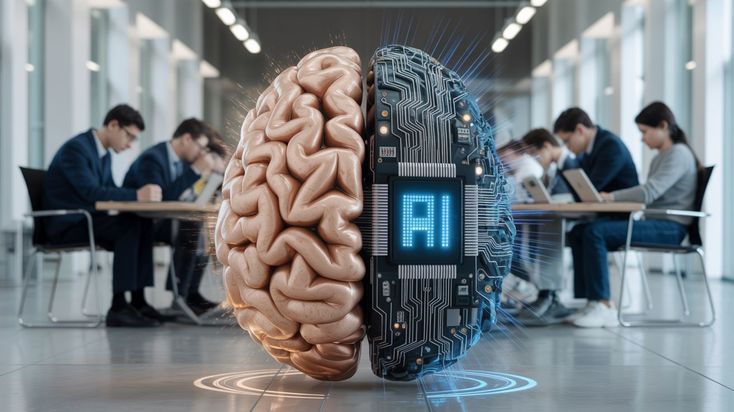
Human memory and learning are two of the most fascinating abilities of the brain. They allow us to gain knowledge, develop skills, remember experiences, and adapt to new situations. Every time we learn something new, the brain undergoes changes that strengthen connections between neurons. This process, known as neuroplasticity, allows the brain to reorganize itself and improve its ability to store and use information.
Understanding how memory and learning work can help students, professionals, and lifelong learners develop better strategies for gaining knowledge and improving mental performance.
How Does the Human Brain Learn?
Learning is the process through which the brain acquires new information, behaviors, or skills. When we experience something new, neurons in the brain communicate through electrical and chemical signals. With repeated practice and exposure, these neural connections become stronger, making it easier to recall information or perform a skill.
A key concept behind learning is neuroplasticity, which refers to the brain’s ability to change its structure and function. Whether someone is learning a language, playing an instrument, or studying a complex subject, the brain adapts by creating and strengthening pathways related to that activity.
The Process of Memory Formation
Memory formation involves three major stages: encoding, storage, and retrieval.
Encoding occurs when the brain receives and processes new information. Attention plays an important role during this stage because information that is not properly noticed or understood is less likely to be remembered.
After encoding, the brain stores information. Some memories remain temporary, while others become long-term memories through a process called consolidation. The hippocampus, a region of the brain involved in memory, helps organize and transfer new experiences into long-lasting memories.
The final stage is retrieval, which is the ability to access stored information. The more often a memory is retrieved, the stronger and easier it becomes to recall.
Different Types of Human Memory
Human memory is not a single system; it consists of several types that work together.
Working memory allows us to hold and process information for short periods. It helps with activities such as solving problems, following instructions, and making decisions.
Long-term memory stores information for extended periods. It includes facts, personal experiences, and knowledge gained throughout life. Skills such as driving, typing, or playing sports are stored through procedural memory, which allows actions to become automatic with practice.
Why Do We Forget Information?
Forgetting is a natural part of human memory. The brain receives a huge amount of information every day, and it must decide what information is important enough to keep.
Information may be forgotten because it was never fully stored, because similar memories interfere with each other, or because a memory becomes weaker when it is not used for a long time. However, forgetting can also be beneficial because it helps the brain focus on useful and meaningful information.
The Role of Sleep in Memory and Learning
Sleep plays a critical role in learning and memory. During sleep, the brain processes experiences from the day and strengthens important neural connections. This process helps transform newly learned information into stable long-term memories.
A lack of quality sleep can negatively affect attention, concentration, and the ability to learn new information. Getting enough rest is therefore an essential part of effective learning.
How Practice Improves Learning
Practice is one of the most powerful tools for improving memory. Repeated exposure to information strengthens neural pathways and makes recall easier.
However, effective practice is not simply repeating the same information. Techniques such as active recall, where a person tries to remember information without looking at notes, and spaced repetition, where learning is reviewed over time, have been shown to improve long-term retention.
Understanding concepts, applying knowledge, and receiving feedback also help create stronger memories than passive reading alone.
The Connection Between Emotions and Memory
Emotions have a significant influence on memory. Experiences connected with curiosity, excitement, or personal meaning are often remembered more clearly because emotional systems in the brain help strengthen memory formation.
This is why people often remember important life events more easily than ordinary daily experiences. Emotional connection can make information more meaningful and easier to recall.
The Importance of Motivation in Learning
Motivation affects how much attention and effort a person gives to learning. When people are interested in a subject or have clear goals, they are more likely to remain focused and continue practicing.
Successful learning requires patience because developing strong knowledge and skills takes time. Consistent effort, curiosity, and a willingness to improve are essential parts of the learning process.
Science-Based Methods for Better Learning
Effective learning combines several approaches. Studying in shorter sessions over longer periods is usually more effective than trying to learn everything at once. Testing yourself regularly improves memory because it trains the brain to retrieve information.
Connecting new ideas with existing knowledge also improves understanding. When information has meaning and relates to previous experiences, the brain is more likely to store it for future use.
Frequently Asked Questions (FAQs)
What is the difference between learning and memory?
Learning is the process of gaining new knowledge or skills, while memory is the ability to store and recall that information. Learning creates changes in the brain, and memory allows those changes to be used later.
How does repetition improve memory?
Repetition strengthens connections between neurons. When information is reviewed and practiced regularly, the brain becomes more efficient at storing and retrieving it.
Can the brain continue learning throughout life?
Yes. The brain remains capable of change throughout life through neuroplasticity. People can develop new skills and gain knowledge at any age.
Why is sleep important for learning?
Sleep helps the brain organize and strengthen newly learned information. Without enough sleep, concentration and memory performance can decline.
What is the best way to remember information?
The most effective methods include active recall, spaced repetition, understanding concepts, and applying knowledge through practice.
Does multitasking improve learning?
No. Multitasking often reduces learning quality because attention becomes divided. Focusing on one task at a time usually leads to better understanding and memory.
Can emotions affect memory?
Yes. Emotional experiences are often remembered more strongly because emotions influence the brain systems involved in memory formation.
Conclusion
The science of human memory and learning reveals that the brain is a flexible and adaptable system. Learning is not simply about storing facts; it is about creating meaningful connections that allow knowledge and skills to grow.
By understanding how memory works and using proven learning techniques such as practice, retrieval, and spaced review, anyone can improve their ability to learn. The human brain has an incredible capacity for growth, and continuous learning helps keep it active and adaptable throughout life.