

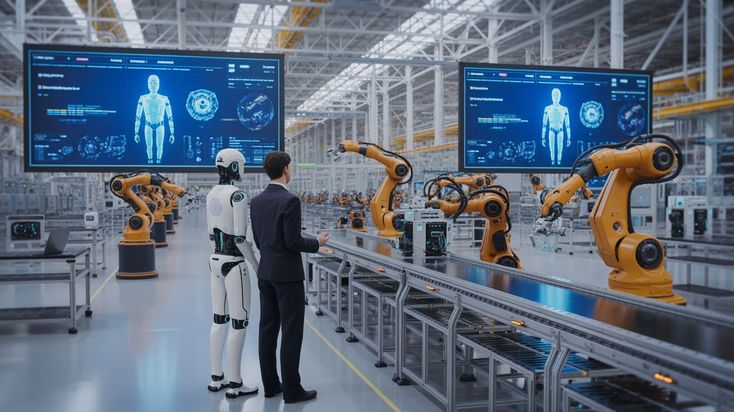
Automation has become one of the most transformative forces in the modern economy. Powered by artificial intelligence (AI), robotics, machine learning, and advanced software, automation is changing how businesses operate across industries. From manufacturing and logistics to healthcare and finance, organisations are using automated systems to improve efficiency, reduce costs, and enhance productivity.
While automation creates exciting opportunities for innovation and economic growth, it also raises important questions about the future of human employment. Will machines replace workers entirely, or will automation create new jobs and reshape existing roles? This article explores the rise of automation, its impact on the workforce, and how individuals and businesses can prepare for the future.
What Is Automation?
Automation refers to the use of technology to perform tasks with little or no human intervention.
Modern automation includes:
- Industrial robots
- Artificial intelligence systems
- Machine learning algorithms
- Automated software workflows
- Self-service technologies
- Smart manufacturing systems
These technologies help organisations complete repetitive tasks more accurately and efficiently.
Why Automation Is Growing
Several factors are driving the rapid adoption of automation.
These include:
- Rising labour costs
- Advances in AI and robotics
- Demand for greater productivity
- Increased workplace safety
- Improved accuracy
- Growing digital transformation
Businesses are investing in automation to remain competitive in an increasingly technology-driven world.
Industries Being Transformed
Automation is influencing nearly every sector of the economy.
Major industries experiencing significant change include:
- Manufacturing
- Healthcare
- Retail
- Banking and finance
- Transportation
- Logistics
- Agriculture
- Customer service
- Information technology
- Hospitality
Each industry uses automation differently depending on its operational needs.
Benefits of Automation
Automation provides numerous advantages for businesses and consumers.
Some key benefits include:
- Increased productivity
- Reduced operational costs
- Improved product quality
- Faster service delivery
- Greater workplace safety
- Consistent performance
- Better data analysis
These improvements help organisations become more efficient while delivering better customer experiences.
How Automation Affects Employment
Automation changes jobs rather than simply eliminating them.
Routine and repetitive tasks are more likely to be automated, allowing employees to focus on work that requires creativity, critical thinking, communication, leadership, and problem-solving.
Although some traditional roles may decline, new positions continue to emerge in technology, engineering, cybersecurity, AI development, data analysis, and digital operations.
Jobs Most Likely to Be Automated
Certain occupations involve predictable tasks that technology can perform efficiently.
Examples include:
- Data entry
- Basic manufacturing processes
- Inventory management
- Routine administrative work
- Simple customer support tasks
- Repetitive quality inspections
Automation often assists workers rather than replacing entire professions.
Careers Expected to Grow
Many occupations are expected to expand alongside automation.
Growing career areas include:
- Artificial intelligence engineering
- Robotics maintenance
- Cybersecurity
- Data science
- Software development
- Healthcare
- Renewable energy
- Digital marketing
- Human resources
- Education and training
These roles typically require technical expertise, adaptability, and interpersonal skills.
The Importance of Human Skills
Despite technological advances, uniquely human abilities remain highly valuable.
Skills likely to remain in demand include:
- Creativity
- Emotional intelligence
- Leadership
- Critical thinking
- Communication
- Teamwork
- Complex decision-making
- Adaptability
These capabilities are difficult for automated systems to replicate fully.
Reskilling and Upskilling
Continuous learning has become essential in an evolving job market.
Workers can prepare for future opportunities by:
- Learning digital skills
- Taking online courses
- Earning professional certifications
- Developing technical knowledge
- Improving communication abilities
- Staying informed about industry trends
Lifelong learning helps individuals remain competitive as technology evolves.
The Role of Businesses
Employers play an important role in helping workers adapt.
Organisations can support employees by:
- Providing training programmes
- Investing in workforce development
- Encouraging innovation
- Promoting continuous learning
- Supporting career transitions
- Using automation responsibly
Businesses that invest in their workforce are often better positioned for long-term success.
Challenges of Automation
Although automation offers many advantages, it also presents challenges.
Important concerns include:
- Job displacement
- Skills shortages
- Income inequality
- Ethical use of AI
- Data privacy
- Cybersecurity risks
Addressing these issues requires collaboration between governments, businesses, educators, and workers.
The Future Workplace
The workplace of the future is likely to combine human expertise with intelligent technologies.
Employees may increasingly work alongside AI-powered systems, collaborative robots, and advanced digital tools. Rather than replacing people entirely, automation is expected to augment human capabilities, enabling workers to focus on strategic, creative, and customer-focused responsibilities.
Flexible work environments and technology-driven collaboration are also expected to become more common.
Preparing for the Future
Individuals can prepare for automation by developing transferable skills and embracing change.
Helpful strategies include:
- Building digital literacy.
- Strengthening problem-solving abilities.
- Improving communication skills.
- Learning about AI and emerging technologies.
- Remaining adaptable throughout your career.
- Seeking opportunities for continuous professional development.
Being proactive can help workers remain resilient in a changing labour market.
Conclusion
Automation is transforming industries and reshaping the future of employment. While some routine tasks and roles are becoming increasingly automated, technology is also creating new opportunities, industries, and careers that did not exist a decade ago.
The future of work will depend on collaboration between humans and intelligent machines rather than competition between them. Individuals who invest in lifelong learning, develop adaptable skills, and embrace technological change will be well positioned to thrive in an increasingly automated world.
Frequently Asked Questions (FAQs)
1. What is automation?
Automation is the use of technology, such as software, robots, or AI systems, to perform tasks with minimal human intervention.
2. Will automation replace all jobs?
No. Automation is expected to replace certain repetitive tasks while also creating new roles and changing existing jobs. Many occupations will continue to require human creativity, judgement, and interpersonal skills.
3. Which industries are most affected by automation?
Manufacturing, logistics, retail, finance, healthcare, customer service, agriculture, transportation, and information technology are among the sectors experiencing significant automation.
4. What skills will be most valuable in the future?
Skills such as critical thinking, creativity, emotional intelligence, communication, leadership, adaptability, and digital literacy are expected to remain highly valuable.
5. How can workers prepare for automation?
Workers can prepare by learning new technical skills, earning certifications, improving digital literacy, participating in ongoing training, and staying informed about technological developments in their industry.
6. Does automation create new jobs?
Yes. Automation has contributed to the growth of careers in artificial intelligence, robotics, software development, cybersecurity, data science, digital operations, and other technology-focused fields, while also creating demand for roles that complement automated systems.